Beyond separation: exploring the next generation of PFAS solutions
Key Highlights
- Nature-based remediation systems, such as PEIR Barrier, use plants and engineered materials to intercept and contain PFAS in groundwater with low operational impacts and costs.
- Emerging destruction technologies like EAOP (PFASER) aim to break down PFAS compounds permanently on-site, reducing waste streams and long-term liability.
- Integrated approaches combining containment, destruction, and lifecycle management are essential for adapting to evolving regulations and achieving sustainable water treatment.
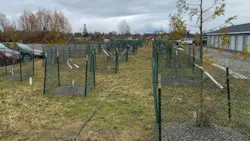
PFAS drinking water standards established by the EPA and states are reshaping water management far beyond the tap. While these regulations create direct compliance obligations for drinking water systems, they are also driving more stringent requirements for wastewater discharges, groundwater remediation, stormwater and residuals management. As PFAS regulations continue to evolve, utilities and other stakeholders are increasingly being challenged to evaluate treatment and management approaches across the full water cycle rather than within individual programs or assets.
Conventional approaches to PFAS treatment have proven effective at removing contaminants from drinking water. Yet, these approaches largely separate PFAS rather than eliminate it, creating concentrated waste streams that must still be managed, transported and disposed of safely.
Today, a new generation of PFAS solutions are beginning to shift the conversation beyond separation alone. Integrated PFAS management strategies can balance treatment performance, operational realities and lifecycle costs. Some of the most promising developments are emerging in two key areas: nature-based remediation and destruction technologies.
Nature-based remediation systems are showing promise for intercepting PFAS in groundwater with lower operational impacts and lifecycle costs, while emerging destruction technologies are advancing the ability to break down PFAS compounds. Together, these approaches are expanding the toolkit available to enhance long-term PFAS management strategies.
Nature-based remediation gains momentum
Nature-based approaches are attracting growing interest because they can help reduce operational impacts while supporting long-term groundwater management goals.
One example is WSP’s PEIR Barrier technology, an engineered treatment strategy that incorporates plants to enhance proven in situ retention barriers, filtering groundwater using sorbents like advanced carbon-based materials. Instead of relying solely on large mechanical systems, the technology works with natural hydrologic processes to help contain contamination before it spreads.
Interested in natural water filtration? Listen to this episode of Talking Under Water.
In this episode, Kaitlin Spiridellis details her World of Water journey to explore water disparities throughout various continents. Learn about trees that filter drinking water in South America at time stamp: 16:02.
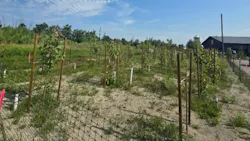
This nature-based remediation approach combines adsorbent media with high-water-use trees to direct groundwater flow through evapotranspiration to the adsorbent media and capture long chain PFAS such as the widely regulated legacy compounds like PFOS and PFOA, with little to no accumulation in leaf drop. The pumping effect of the trees also helps to remove short chain PFAS –– which have less affinity for adsorbent media –– by cycling them from the aquifer to engineered retention zones in the overlying soil. Essentially, PEIR Barrier and soil enhanced by engineered materials draw contaminated groundwater into the treatment zone and capture the PFAS, preventing further migration of both long-chain and short-chain PFAS and providing long-term protection. This enables the retention approach to not only address currently regulated PFAS (e.g., PFOS and PFOA), but also those that are likely to be regulated in the future.
The low-impact remediation is particularly effective at preventing PFAS migration across property lines or into surface water. The approach is especially effective where the shallowest impacted groundwater is within 25 feet of the surface. PEIR Barrier capital installation costs and operational requirements, such as energy use and maintenance, are low when compared to other PFAS treatment technologies (e.g., pump and treat). This technology is uniquely suited for application where power may not be readily available, such as airports, military bases and industrial sites with ongoing operations.
The system was evaluated through a three-year pilot study conducted at a former tannery site in Michigan that was severely impacted by PFAS, likely due to historical use of aqueous film-forming foam, commonly known as AFFF, in its operations.
Results from the pilot demonstrated that dissolved PFAS concentrations in groundwater within the treatment zone decreased by more than 99 percent and have met surface water quality goals. Previously impacted downgradient groundwater PFAS concentrations have also declined steadily upon mixing with PEIR Barrier-treated groundwater and are now reduced by as much as 82 percent in the fourth growing season. These results pave the way for a monitored natural retention management approach for PFAS in groundwater. Capital and operational costs were a fraction of traditional remediation, with estimated savings of more than half the cost of pump-and-treat when comparing the two approaches throughout their entire life cycles, but with arguably better results.
This approach could enable broader adoption of green remediation strategies and support resource management and circular economy goals.
Moving toward PFAS destruction: established destruction technology with an emerging application
While containment and separation remain critical components of PFAS management, many organizations are also exploring technologies capable of destroying PFAS compounds.
This marks an important shift for industries because the carbon-fluorine bond that defines PFAS chemistry is exceptionally difficult to break. That durability is what made PFAS commercially valuable for decades — and what now makes remediation so complex.
Among the emerging destruction approaches receiving increased attention is the Electrochemical Advanced Oxidation (EAOP) process. WSP’s PFASE system uses boron-doped diamond electrodes to generate hydroxyl radicals, which, in addition to direct electrons transfer during the chemical reaction, attack and break down PFAS molecules. This process produces fluoride, water and carbon dioxide as byproducts; the latter two of which are harmless, with fluoride easily managed if required. Unlike separation technologies, PFASER aims for actual destruction of the carbon-fluorine bond — the core of PFAS persistence.
The technology is particularly well suited for treating concentrated high-strength PFAS liquid waste streams, such as firefighting foam-contaminated water at airports or industrial sites and wastewater from industrial processes. The EAOP technology is not only effective at treating PFAS but also destroys other contaminants such as volatile organic compounds and soluble recalcitrant organic compounds that may be comingled with the PFAS-impacted water, making an integrated treatment approach especially valuable. Its modular design also allows for scalable installation at facilities needing targeted remediation or to use PFASER to treat extracted groundwater in groundwater pump and treat systems.
The system also includes a patented process that uses a small amount of granular activated carbon (GAC) polish to address low level PFAS and effectively remove perchlorate from the treated water. This innovative and hybrid approach solves one of the previously identified shortcomings of electro-chemical oxidation technologies, which is the unintended production of perchlorate when chloride is present in the influent water. In lab and pilot projects, PFASER has demonstrated up to 95 percent PFAS destruction in real groundwater, with the remaining PFAS then captured by the GAC polish system. The destruction efficiency can be much higher, in the 99.99 percent and more, the more elevated the raw water PFAS concentration is. It is an omnivorous system when it comes to PFAS destruction.
By destroying PFAS mass in a first stage, the system significantly reduces the amount of carbon (i.e., GAC) or other adsorptive media needed to meet regulatory criteria in the final discharge stream to greatly reduce media purchasing and disposal costs and regulatory risk. It represents a shift toward true destruction on-site, rather than mere separation with PFAS management off-site. At scale, it can minimize the creation of PFAS-laden waste streams and reduce reliance on landfilling or incineration.
“We see EAOP-based PFAS destruction, including PFASER, as an essential part of PFAS management because it permanently destroys PFAS on-site,” notes a colleague of the author, Bill Malyk, P.Eng., BCEE, senior principal engineer, WSP. “By eliminating the need to store PFAS or manage PFAS-impacted media and liquid streams over the long term, this approach helps reduce future liability as regulations for PFAS disposal and fate continue to evolve.”
Additionally, the low energy footprint, proven pilot results and full-scale system suggest it could become a cornerstone technology for future-ready, on-site PFAS management.
Preparing for the next phase of PFAS management
Successful PFAS management increasingly depends on understanding the full lifecycle of contamination –– from source control and groundwater migration to treatment residuals and final disposal. Both approaches are examples of innovative and field-proven approaches that signal a move beyond conventional separation methods, offering solutions that are more sustainable, effective and adaptable to evolving regulations.
The nature-based approach could facilitate long-term, cost-effective prevention of PFAS migration in groundwater, while the electrochemical approach could enable on-site destruction, reducing environmental liability and lifecycle costs.
As organizations prepare for the next phase of PFAS management, it is critical to understand the long-term operational, financial and regulatory implications associated with each approach, from residual waste handling to energy demands and future compliance and reputational risks. Rather than betting on a single treatment method, the most adaptive strategy may involve layered approaches that combine established treatment systems with newer approaches focused on containment, destruction and long-term lifecycle management.
“As PFAS requirements expand across multiple programs, it becomes clear that performance depends on context. It’s important to have a flexible toolbox, where solutions such as PEIR Barrier and PFASER can provide more effective outcomes when applied under the right conditions,” notes Matt Burns, technical fellow, senior vice president, national director of emerging contaminants and global practice area network lead, WSP.
The organizations best positioned for success will be those that pair proven treatment methods with emerging innovations, remain adaptable as regulations evolve and focus beyond near-term compliance to build resilience for decades to come.
About the Author
 Valerie Leveille
Valerie Leveille
Valerie Leveille is a Senior Consultant, Water/Wastewater Treatment, at WSP in Canada. Dr. Léveillé has 17 years of experience as a waters and wastewater treatment engineer. During her career, Dr. Léveillé has developed and optimized treatment for domestic wastewater, drinking, industrial, ground and surface waters for homes, isolated communities, ships, military bases, schools, trains, garages, mines, food and cosmetic industries and rendering plants among other.
Len Mankowski
Len Mankowski, CPG, is vice president of emerging contaminants research and development at WSP in the U.S. Mankowski has over 20 years of site characterization and remediation experience at the state and federal level across the U.S. and has supported/lead projects in Canada and Australia. He specializes in applying innovative remedial investigation techniques and data driven conceptual site model development to deliver remedial solutions.