Q&A: Real-world insights into pipe material performance and infrastructure durability
Key Highlights
- The showcased study compiles two decades of real-world failure data, providing a robust foundation for understanding pipe material performance across diverse geographic regions.
- Findings highlight that copper outperforms plastics in durability, while legacy materials like lead and galvanized steel can remain structurally sound for over 75 years, raising public health concerns.
- Multiple survival analysis models reveal different failure patterns, underscoring the importance of using diverse analytical approaches for comprehensive risk assessment.
- Utilities can begin risk evaluation by assessing home ages and educating residents, even without complex modeling tools, through partnerships with organizations like HomeServe.
- The session demonstrates how accessible open-source tools and AI workflows enable utilities of all sizes to implement data-driven asset management practices.
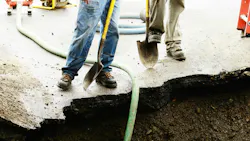
During AWWA ACE 2026 in Washington, D.C. on Monday, June 22, Juneseok Lee will present findings from research that he conducted with his coauthors Myles Meehan at HomeServe and Sarah Wohlfahrt at Manhattan University that compiled 20 years of water service line failures into one data set. From this compiled data, Lee, Meehan and Wohlfahrt discovered surprising insights about pipe materials and durability.
WaterWorld Vice President of Content Strategy Bob Crossen spoke with the primary author Juneseok Lee ahead of the conference next week to get a tease of the presentation. His coauthors Meehan and Wohlfahrt also collaborated on the responses to the questions.
Contact the speakers
- For academic inquiries, reach out to Juneseok Lee via email.
- For industry-related questions, reach out to Myles Meehan via email.
Bob Crossen: What prompted your team to take a nationwide look at water service line failures over a 20-year period?
Juneseok Lee: Back in 2014, I reached out to HomeServe because I was interested in their water service line programs. The service line is the structurally weakest spot in a water distribution system, its Achilles' heel, so I wanted to better understand service line failure mechanisms, their contribution to water loss, and what they reveal about broader infrastructure deterioration/structural integrity issues. My research up to that point focused on hydraulics and water quality in distribution systems/ premise plumbing, including the substantial water loss and contamination risks that can occur on the customer's side of the service lines. That shared interest with HomeServe led to our first collaboration and our September 2017 paper in Journal AWWA (AWWA’s Distribution and Plant Division Best paper award). Now, ten years later, we agreed it was time to revisit the question; this time applying machine learning to a far larger, 20-year national service line dataset to see what modern analytics could uncover.
BC: What insights become possible when analyzing tens of thousands of real-world service line failures rather than modeled data?
JL: A major benefit of working with HomeServe is access to a large, geographically diverse national database of actual service line repair and replacement records. Roughly 76,000 cleaned failure incidents are drawn from millions of jobsite entries between 2006 and 2025. Because these are documented field failures rather than simulated outcomes, we could examine how virtually every common pipe material such as copper, galvanized steel, PEX, lead, and others actually perform across a full range of ages and operating conditions in the real world.
That grounding in real data is what separates this work from theoretical modeling: both the 2026 analysis and our earlier 2017 study deliver evidence-based, real-world results that utility leaders, policymakers, and asset managers can act on with confidence.
Surprising findings around risk of failure and pipe durability
BC: What were the most surprising findings when comparing the performance of different pipe materials over time?
JL: Some findings confirmed what market performance and field experience already suggested; copper consistently outperformed the plastic materials, while polybutylene and the polyethylene pipes (blue and black poly) showed a clear tendency toward early failure and shorter average service lives. Our survival models captured this as a high rate of early-life failures that taper off with age, a pattern consistent with manufacturing or installation-related defects.
The more unexpected result emerged at the opposite end of the spectrum. Lead and galvanized steel exhibited the longest structural survival of any material in the dataset; lead, in particular, maintained a survival probability above 50% well beyond 75 years. That durability is precisely the concern in that a lead service line can remain physically sound for decades while continuing to pose a serious public-health risk, which underscores why structural longevity alone cannot guide replacement decisions.
A second, more methodological surprise was that our models did not always agree. Kaplan–Meier analysis ranked copper consistently ahead of PEX, whereas the Weibull model suggested PEX could perform comparably once it survives its early-failure period. Rather than a contradiction, this divergence reinforced the value of applying multiple survival modeling methods (Kaplan–Meier, Weibull, and Random Survival Forest) in parallel, since each illuminates a different dimension of how and when materials fail.
BC: Which materials showed the highest risk of early failure, and which demonstrated longer-term durability?
JL: The highest risk of early failure was concentrated among the plastic materials. PEX, polybutylene, and the polyethylene pipes (blue and black poly) all showed a tendency to fail relatively soon after installation and carried among the shortest average service lives in the dataset; brass and PVC followed a similar, though less pronounced, pattern. One qualifier is worth noting: PEX is a comparatively newer material with younger installations, so part of its early-failure signal likely reflects its limited time in service rather than poor durability alone. In practical terms, these are the materials most likely to warrant closer monitoring and earlier, proactive replacement.
At the durable end, copper, iron, and steel performed best for long-term service, retaining high survival probabilities through their first several decades and degrading gradually rather than failing early. One important qualifier applies here: several of the longest-lived materials in the data such as iron, galvanized steel, and lead are legacy materials no longer used in new service lines; and galvanized in particular is increasingly treated like lead and replaced wherever it is found. Their longevity therefore reflects the performance of pipe already in service, not a recommendation for new construction. Among materials still in use today, copper remains the most dependable choice for long-term installations and reliability.
What the data means for service line risks
BC: How do your findings reinforce the urgency around lead service line replacement initiatives?
JL: Despite having long term durability, the health risks of lead service lines are well documented, even with good water quality management. This is why HomeServe’s practice is to replace leaking or damaged lead lines when found during routine service delivery for customers holding our service plans.
BC: Based on your findings, what are the first steps utilities should take to better understand their own service line risk?
JL: Based on our findings, utilities can take two clear first steps to better understand their own service line risk. The first step is to assess the age of homes across their service footprint. Older homes often contain pipe materials nearing the end of their usable lifespans, so knowing when residents' homes were built gives utilities a reliable way to gauge the level of risk their homeowners face.
The second step is to educate residents about which portions of the service lines they're responsible for when it comes to repair or replacement. Many homeowners simply don't know where their responsibility begins, which can lead to confusion and unexpected costs. Utilities can deliver this education through a partnership with a company like HomeServe, which can fund the outreach and offer residents affordable ways to protect themselves against costly repairs to the service lines they are responsible for. Together, these steps help utilities understand their risk more accurately while giving homeowners the clarity and peace of mind they need.
BC: How can smaller or resource-constrained utilities begin applying these insights without complex modeling tools?
JL: Smaller or resource-constrained utilities don't need complex modeling expertise and tools to get started. HomeServe is happy to work directly with utilities, sharing the data findings and using AI tools to analyze local housing stock information. That means utilities can put these insights to work without building anything new in-house. A formal partnership with HomeServe takes it a step further. It gives interested utilities access to the resources and data needed to address service line challenges head-on, with practical solutions tailored to their community.
What AWWA ACE attendees can expect during the presentation
BC: How did the findings from this study shape the educational session you’ve developed?
JL: The session is built around the central finding of the study in that the overall, long-term failure and reliability trends we observed across the different service line materials, providing practitioners a data-grounded picture of how each material tends to perform over its service life.
At the same time, we are careful to place those trends in context. Material selection in practice is rarely a performance-data decision alone: cost, corrosion resistance, the taste and odor of the delivered water, proven market performance, and the recommendations of plumbers and general contractors all weigh heavily on what ultimately gets installed. The session is therefore designed to give utilities and practitioners a clear, evidence-based view of how different piping materials fail over time, while recognizing that this evidence is one important input among several real-world material decisions.
BC: What specific tools, frameworks, or methodologies will attendees walk away with after your session?
JL: The core takeaway is a transferable methodology rather than a single proprietary tool. Attendees will see how the survival analysis framework we applied, such as Kaplan–Meier curves, Weibull modeling, and Random Survival Forest can be applied to a utility's own records. Many utilities already hold the raw material this approach needs: historical installation dates, permit records, and repair or replacement histories. With that data in hand, the same methods can help them estimate material-specific failure timing, identify their highest-risk pipe populations, and prioritize targeted lead service line replacement and other interventions.
Just as important, the barrier to performing this kind of analysis has dropped substantially. Open-source tools in R and Python, increasingly supported by AI-assisted workflows/vibe coding mean a utility no longer needs a dedicated data-science team to begin. Once the historical data is assembled, these accessible analytical and machine learning tools can generate meaningful insights regarding their system behavior, helping utilities shift from reactive repair toward proactive, data-driven asset management practices.
BC: If a utility attends only one session this year on service line management, why should it be this one?
JL: This session is grounded in one of the largest real-world service line failure datasets assembled to date; two decades and more than 76,000 cleaned/documented failures from across the U.S. are utilized, so the insights reflect how materials behave in the field rather than how they perform in theory or simulation.
Utility leaders will leave with practical, data-driven modeling options they can apply to their own installation and repair records to build service line management and replacement strategies. The value also extends beyond utilities: code enforcement officials and manufacturers can gain a clearer picture of how different pipe materials hold up in service, helping inform local code updates and product improvements. Few sessions bring real failure data, modern analytics, and actionable strategies together for these many stakeholders in one place.
Citations & references
About the Author
 Bob Crossen
Bob Crossen
Vice President of Content Strategy for the Water and Energy Groups
Bob Crossen is the vice president of content strategy for the Water and Energy Groups of Endeavor Business Media, a division of EndeavorB2B. EB2B publishes WaterWorld, Wastewater Digest and Stormwater Solutions in its water portfolio and publishes Oil & Gas Journal, Offshore Magazine, T&D World, EnergyTech and Microgrid Knowledge in its energy portfolio. Crossen graduated from Illinois State University in Dec. 2011 with a Bachelor of Arts in German and a Bachelor of Arts in Journalism. He worked for Campbell Publications, a weekly newspaper company in rural Illinois outside St. Louis for four years as a reporter and regional editor. Crossen can be reached at [email protected].