Researchers develop water-harvesting jacket that pulls drinking water from the air
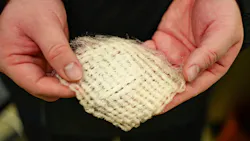
Engineers at the University of Texas at Austin have developed a wearable textile capable of harvesting drinking water directly from the atmosphere, a technology that could expand access to water in remote locations and emergency situations.
The research, published in Science Advances, centers on a jacket embedded with a specialized moisture-capturing textile that collects water vapor from the air and channels it to detachable harvesting units. The units can then be heated to release and collect potable water. In testing, the system produced between 400 and 900 milliliters (14 to 30 ounces) of drinking water per day depending on ambient humidity conditions.
Researchers said the textile demonstrated a three- to 10-fold performance improvement compared to conventional atmospheric water-harvesting materials at similar scales. Rather than focusing solely on moisture absorption, the team engineered the fabric to efficiently move water from vapor to liquid and through the textile for collection.
The technology could have applications for outdoor recreation, military operations, agriculture, disaster response and communities with limited access to drinking water infrastructure. Researchers are also exploring its integration into backpacks, tents and emergency shelters.
The wearable system complements a separate atmospheric water-harvesting device developed by the same research team and recently published in Nature Water. That solar-powered system produced up to 1.3 liters of drinking water per day in both arid and semi-humid environments, including field tests in New Mexico’s Chihuahuan Desert and Austin, Texas.
According to the researchers, the broader technology platform relies on a biomass-derived hydrogel fabric that absorbs moisture from the air and releases it when heated by sunlight. The team believes the approach could offer a decentralized water supply solution in water-stressed regions where conventional infrastructure is difficult or costly to deploy.
The University of Texas has filed a patent application for the wearable textile technology as researchers continue evaluating commercial and field applications.