Broward County advances major PFAS treatment upgrades with Carollo, CDM Smith

Broward County, Fla., has selected Carollo Engineers, in association with CDM Smith, to design a comprehensive set of water treatment and transmission upgrades aimed at addressing per- and polyfluoroalkyl substances (PFAS) in the county’s groundwater supplies. The project is intended to bring the utility into compliance with the U.S. Environmental Protection Agency’s National Primary Drinking Water Regulation for PFAS ahead of the proposed April 2031 compliance deadline.
Described as one of Florida’s largest PFAS treatment initiatives to date, the effort includes installation of nanofiltration treatment systems at both of the county’s water treatment plants, along with approximately six miles of large-diameter potable water transmission main to improve system redundancy and reliability.
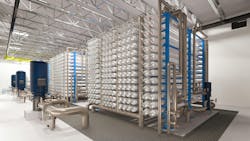
“We applaud Broward County for taking decisive action to address PFAS ahead of the EPA deadline. By implementing state-of-the-art nanofiltration systems, the County demonstrates an unwavering commitment to safe drinking water while building resilient infrastructure designed to meet both current and future regulatory requirements,” said Elizabeth Fujikawa, Carollo principal in charge, in a press release.
The upgrades will be implemented at Water Treatment Plant 1A in Lauderdale Lakes, a 16-mgd facility constructed in 1960, and Water Treatment Plant 2A in Pompano Beach, a 30-mgd facility built in 1975. Both plants draw from the Biscayne Aquifer and currently use conventional lime softening with dual media filtration. The facilities will remain fully operational during construction to maintain uninterrupted drinking water service.
In addition to PFAS removal, the project includes SCADA system upgrades and nanofiltration membranes designed for potential future conversion to reverse osmosis. The new transmission main will interconnect the two plants, strengthening system resiliency across the service area.