PFAS detected at 83% of monitored U.S. waterways, report finds
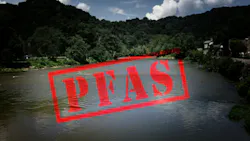
Per- and polyfluoroalkyl substances (PFAS) were detected at 83% of 1,602 U.S. surface-water monitoring locations tested between 2022 and 2024, according to an analysis by Environment America Research & Policy Center.
The report found PFAS at 1,329 locations across rivers, lakes, streams and other surface waters. Researchers identified 114 different PFAS compounds among the 174 tested across the datasets. The analysis drew primarily on the U.S. Environmental Protection Agency’s Water Quality Portal, supplemented by data from Waterkeeper Alliance and state agencies in Maine and Massachusetts.
The findings likely represent only a portion of nationwide contamination because monitoring remains limited in many areas and not all available results are included in the Water Quality Portal, the report said.
The report identified several pathways through which PFAS can reach waterways, including industrial discharges, wastewater treatment plant effluent, landfill leachate and runoff from farmland where PFAS-contaminated sewage sludge has been applied. Firefighting foams used at airports and military facilities were also identified as sources of contamination.
One of the highest concentrations in the dataset was recorded in Brunswick, Maine, following an accidental release of aqueous film-forming foam at Brunswick Executive Airport in August 2024. Maine Department of Environmental Protection testing found PFOS at 1.04 million nanograms per liter at the inlet of an affected stormwater retention pond.
Environment America recommended phasing out PFAS where safer alternatives are available, requiring industrial facilities to prevent releases to waterways and remove PFAS from wastewater sent to treatment plants, ending the application of PFAS-contaminated sewage sludge to farmland and expanding surface-water monitoring.
The report emphasized that monitoring can help identify contamination and track trends but must be accompanied by measures to prevent PFAS from entering the environment.