City's Biosolids Program Can't Keep Up with Demand
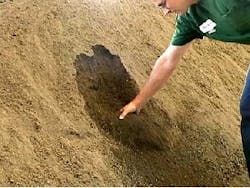
Looking for a way to ease the trials and tribulations of running a small wastewater treatment plant and to deal with the residual solids, Auburn, IN, implemented a Class A advanced alkaline stabilization system in lieu of expanding anaerobic digestion of its biosolids. This change has proven to be successful in advancing the efficiency of the wastewater treatment plant while augmenting the biosolids program and increasing the overall flexibility of the facility.
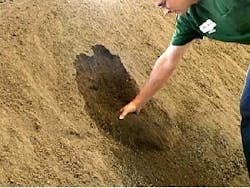
During an upgrade of the facility's capacity from 3.35 to 4.5 mgd, Plant Superintendent David Lochner and Biosolids Supervisor Dan Rabe looked at options available to upgrade their biosolids program. Previously, Auburn used anaerobic digesters to reach Class B disinfection levels under EPA regulation. They managed their biosolids with a land application program that targeted the vast agriculture market in the area.
Although the land application program was successful, there were still areas of concern.
"We needed to be less dependent on things such as the permitting process and the weather," Rabe said. The city also wanted to increase its ability to market its biosolids to a variety of outlets and decrease its dependency on permitted sites for land application of digested biosolids.
The City of Auburn and its consulting engineer, Beam, Longest and Neff, reviewed their options and decided that the N-Viro Advanced Alkaline Stabilization Process was the best choice to achieve their goals. The N-Viro Class A disinfection process has proven to be a flexible biosolids treatment process that increases outlet markets and lowers liability. Class A, exceptional quality biosolids are not subject to further regulations in regards to use.
According to Rabe, 90 percent of all small treatment plants are overloaded, as was the case in Auburn. Two of the most successful outcomes of using the N-Viro Process to treat their biosolids are regularity and consistency.
When processing began in July 1999, the plant was processing nearly every day. While this was more often than originally planned, Rabe and city staff realized they were simply catching up from the years of backup accumulated in their digesters and holding tanks. Currently, solids processing takes place two days per week with total production nearing 2000 dry tons of biosolids processed each year.
"The N-Viro Process takes all the headaches away. We can process our solids whenever we need to regardless of weather conditions or land application siting concerns," Rabe said.
Auburn is now much less dependent on the land application market. While agriculture is still the primary market, biosolids are sold from the facility for $1 per ton of product. This has all but eliminated the city's need for land application equipment (though they still have spreaders that they use to apply biosolids to city fields and parks.)
Biosolids handling has gone from a cost of up to $24,000 per month in landfill costs to a gross revenue of nearly $4,400 per month. This has been accomplished by the sale of biosolids and through the regionalization of the facility. Auburn is currently accepting nearly 60,000 gallons per month of liquid biosolids from other municipalities and other contracts in the area. The facility is still operating well below capacity and staff are exploring opportunities to bring in more outside biosolids to the facility.
Process Description
The N-Viro process used in Auburn is a combination of physical, chemical and biological reactions between organic solid wastes, such as wastewater sludge, or biosolids, and mineral by-products collected from air pollution prevention processes used by the lime and cement industries, as well as the electric power generating industry. Examples of by-products used include fly ash, fluidized bed ash, kiln dusts and scrubber residue.
The effect of the controlled reactions destroys pathogens, stabilizes odors, fixates metals, immobilizes nutrients, and maintains beneficial microbes, leaving a safe, stable product that can be stored for long periods of time. By pasteurizing the product and not sterilizing, re-growth of pathogens does not occur, allowing for odor control and additional protection from disease causing organisms.
Auburn de-waters its biosolids using a belt filter press, resulting in a 30 percent solids filter cake. The cake solids are conveyed to a self-contained mixer that is automated and blends the correct proportion of mineral by-products to the biosolids. Pneumatically fed, dry material silos store the different by-products. Available lime in the by-products reacts with the water in the biosolids to generate increases in temperature and pH to facilitate the disinfection process. The high pH process also fixates heavy metals and immobilizes nutrients, particularly phosphorous, and effectively controls odors normally associated with biosolids.
After mixing, the resulting 50 percent solids material coming out of the mixer is cured for 12 hours and then laid out in windrows where it is turned using standard aeration equipment for three days to accelerate the drying process and to achieve approximately 60 percent solids. The finished product is stored outside until distribution.