8,000 analytes, one source of truth
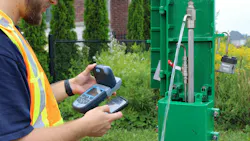
King Township, a small, predominantly rural lower-tier municipality within York Region, Ontario, operates four municipal drinking water systems and two small drinking water systems. It also operates 9 sewage pumping stations and stormwater across the Township. The Township handles local water distribution and sewage collection, while the upper-tier Region oversees bulk water supply, delivery, and wastewater treatment. The Township’s compliance work centers entirely on what happens after water leaves the treatment facilities, including sampling, monitoring, and reporting throughout the distribution network that serves around 30,000 people.
Until 2023, the Township managed its water data in Excel spreadsheets. A small team of certified operators entered sample results into shared workbooks, each working at a different pace and with information maintained across multiple files. Reporting required manually compiling data from those files. While the Township fulfilled its compliance requirements, the process was cumbersome and relied on manual review and verification to confirm data accuracy. In addition, the spreadsheet-based approach offered limited audit trail capabilities, creating an opportunity to improve oversight, accountability, and the centralization of information.
Britany Hodge joined the Township in June 2023 as its first dedicated Environmental Infrastructure and Compliance Supervisor. Preparing for the 2024 reporting year, she concluded the existing Excel workflow needed either a full rebuild or replacement. The Manager of Environmental Services (Kyle Snell) knew some municipalities were using Hach WIMS™ and suggested the Township look into the software. That research led to WIMS Rio, which the team found better suited to a municipality of King’s size. Once the decision was made, implementation moved quickly.
Building the system
Rio implementation began with the underlying structure: each of the Township’s drinking water systems was set up as a separate operation, with sample locations and stations mapped individually. Next, the team set up each parameter, assigned a unit of measure, added calculated values like combined chlorine, and defined operational and compliance thresholds. Part of building the system was creating reports. As well as setting up the Sample Manager Module, the team identified the sample frequency, location, and analytes for each sample collected.
Access is split into two tiers based on roles: operators work with Basic accounts built around daily sampling, while a smaller group holds Admin access for system-level configuration and reporting decisions.
Training and rollout followed a staged schedule rather than a single cutover. In May 2024, staff completed assigned online training using self-paced training modules in the Aquatic Academy that aligned with their assigned roles. This was then followed by a facilitated training session led by Hodge and an Aquatic Informatics Implementation Specialist.
Staff began using Rio for live daily operations in June 2024; this was done in parallel with the existing Excel databases. Three months after the training started, a survey collected early feedback, and the Township completed a full transition away from Excel the following month. A second survey was sent one month after the full transition to assess adoption and to surface further improvement ideas.
Hodge explained, “The Township's drinking water system is managed more broadly under Ontario’s Drinking Water Quality Management Standard (DWQMS), which is built around a plan-do-check-act cycle that emphasizes continual improvement.”
Hodge used that structure for the Rio rollout, treating staff feedback as a required input rather than an afterthought. Anonymous surveys ran at each stage so operators could speak freely. Survey results helped identify where staff were gaining confidence and where further improvements were needed. Additionally, continual-improvement suggestions were a standing agenda item at monthly team meetings, which fostered further in-person feedback.
The first survey results weren’t perfect, which was, in Hodge’s view, the expected shape of a major change. “By the third survey, which was one year from the full transition to Rio, staff confidence in the system had climbed from 80 percent to 87 percent to 100 percent - a clear indication that adoption across the team was complete.”
How the township uses Rio today
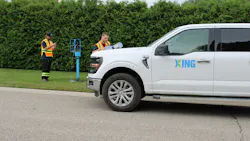
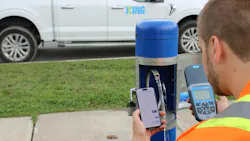
Day-to-day operation runs through Rio’s Sample Manager module, and Jordan Wiedrick, Environmental Technologist with the Township, oversees that process. Operators check their phones on scheduled sampling days to see which stations are due for sampling, then complete the rounds and submit disinfection residual readings directly into the WIMS Rio app from the field.
Additional samples, such as microbiological, go to an external accredited laboratory, with results returned within a few days and entered into the same sample record once Wiedrick has reviewed them against what operators submitted in the field. Quarterly parameters, including disinfection byproducts follow the same submission path.
From that data, Wiedrick produces trend reports as required, distributed internally as memos or emails, flagging any drinking water sample operational trends. The same reporting supports periodic meetings with York Region, for which Wiedrick uses WIMS Rio reporting functions to develop a technical memo to facilitate discussion between the Operational Teams. “These meetings are really a checkpoint meant to keep the upper- and lower-tier teams aligned on what the data is showing and what corrective action, if any, is warranted,” said Wiedrick.
The team uses a variety of dashboards within the Rio system, ranging from at-a-glance operational overviews to trend analysis for high-priority sample stations and parameters. The dashboards also provide quick access to important documentation and websites used by operational staff, particularly during emergency situations. Beyond their operational value, the dashboards provide supervisors and managers with a high-level view of system performance, enabling them to monitor key indicators and identify emerging trends without reviewing detailed operational records.
One dashboard is dedicated to internal laboratory analysis and displays drinking water quality results against established operational and compliance thresholds using the gauge widgets. This allows staff to quickly identify results that may require follow-up investigation or trigger enhanced monitoring, sampling, or reporting requirements under the Township's Municipal Drinking Water Licence.
The most-used dashboard maps sample stations alongside their latest chlorine residual reading, letting staff see sample results at a glance in relation to their location within the distribution system. When operators conduct field sampling, they sometimes encounter a sample station that is frozen in winter conditions or temporarily unavailable due to maintenance or repairs. In these situations, operators notify Wiedrick, and he uses the dashboard to select a suitable alternative sampling location. “The dashboard is also useful for training, since new staff can see where stations are located and what normal readings are at each sample location,” added Hodge.
An automated alert system layers on top of the sampling data, notifying the team in real time whenever a submitted result falls outside a set operational or compliance threshold.
The Township doesn’t use a dedicated operations-and-maintenance module, but folds equipment checks and verifications into its own operations within the system using the Sample Manager module. Monthly verification of operators’ pocket chlorometers, for instance, runs on a reminder generated by Rio and completed in the first week of each month, keeping that record centralized alongside the water quality data itself.
Streamlining compliance
Across all its systems, King Township processes roughly 157 analytes a week. Under the old workflow, that volume moved through several people working at different speeds with limited coordination. “Consolidating the work into a defined role and a single platform has made the process considerably faster and easier to oversee”, said Hodge. It has centralized and improved oversight of sampling, analytical results, notification and reporting activities within a single system.
One of the most valuable features, according to Wiedrick, is the alert system: “Compliance no longer depends on staff manually tracking every parameter; the moment a result falls outside range, the relevant people are notified,” said Wiedrick. “This matters particularly when someone is on vacation or out sick. The system flags the issue regardless of who’s available to catch it manually.”
Custom reporting templates built around Rio’s data have also simplified regulatory reporting, making it faster to assemble the documentation needed for Ministry of the Environment, Conservation and Parks (MECP) inspections, annual reporting and other compliance requirements.
What’s next
With drinking water fully on Rio, the Township is now looking to do the same with stormwater. Wiedrick, who handles stormwater responsibilities in addition to his water quality work, plans to bring that monitoring data into the same system, along with rainfall data the Township already collects but hasn’t yet put to full use. “Longer term, we want to continue to use the functions available in Rio to move toward more automation within our system to continue to pursue operational excellence,” said Wiedrick.
About the Author
 Courtney Kocel
Courtney Kocel is a Customer Success Manager with Aquatic Informatics. She is a digital solutions expert with an emphasis on data management and compliance in the water industry.