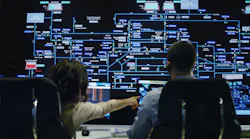
A small Pennsylvania utility puts digital twins to work
Key Highlights
- The $225,033 project integrated Bentley OpenFlows WaterSight with 74 acoustic leak loggers, 15 smart meters, SCADA and other operational data.
- A middleware solution translated legacy SCADA data into a format the digital twin could use.
- Staff and project partners relocated and calibrated loggers to address traffic noise and other site-specific interference.
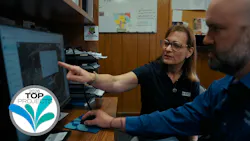
Digital twins are often associated with large utilities and complex infrastructure systems. The Freeland Municipal Authority in Pennsylvania offers a different example.
The Authority, which serves approximately 3,900 residents through 2,100 service connections, implemented a digital twin to improve its understanding of the water distribution system, identify leaks and make more informed infrastructure decisions.
The project, a 2026 WaterWorld Top Project, cost $225,033 and was supported by a $203,500 Susquehanna River Basin Commission grant secured with assistance from HRG.
Putting the data in one place
FMA had a familiar problem for a small utility: non-revenue water losses caused by aging infrastructure and leaks that could be difficult and time-consuming to locate.
Rather than relying solely on reactive maintenance, FMA and HRG built a system that combines real-time operational data with hydraulic modeling and field instrumentation.
The implementation integrated Bentley OpenFlows WaterSight with 74 acoustic leak loggers, 15 advanced metering infrastructure smart meters, the existing SCADA system and other operational data sources.
The result is a centralized, real-time representation of the distribution system.
For utility staff, that means the information needed to understand system conditions is available in one location rather than spread across separate systems.
The digital twin is intended not only to identify leaks more quickly but also to help the Authority prioritize capital improvements, monitor well levels, evaluate system performance during drought conditions and make longer-term asset management decisions. As FMA's Technical Manager put it, "One of the first things I noticed when I started looking at the data was the system overall, just seeing it all in one place, which really made it come full circle for me. Having all that information at one location at your fingertips was a game changer for us."
The technology had to work in the real world
Implementation was not simply a matter of connecting existing systems.
One challenge involved integrating FMA's existing SCADA system with the digital twin platform. Portions of the existing automation system generated data in formats that were not directly compatible with WaterSight.
HRG worked with the software provider and technology partners to develop a middleware solution that could translate the data into a usable format. The experience also provided feedback to Bentley Systems for future software improvements.
The acoustic leak loggers presented another field challenge.
Traffic noise, nearby mechanical equipment and varying site conditions affected acoustic readings at some locations. FMA staff worked with HRG and the equipment manufacturer over several months to relocate and calibrate the loggers.
The process helped improve detection accuracy while also giving utility staff a better understanding of the technology.
More than a technology installation
One of the project's notable characteristics is that the implementation did not end when the technology was installed.
FMA continues to expand its use of the digital twin through additional instrumentation, AMI deployment and ongoing technical reviews. HRG provides monthly support by validating leak logger performance, reviewing WaterSight analytics, monitoring system health and identifying emerging operational trends.
That ongoing collaboration has turned the project into a continuing asset-management program.
The benefits extend beyond finding leaks. The Authority reports that staff have reduced the time, labor, fuel, chemical use and energy associated with locating leaks, allowing resources to be redirected toward other priorities, including water quality concerns, emerging PFAS regulations and future infrastructure planning.
A model for small utilities
The project demonstrates that digital water technology does not necessarily require a large utility or a large capital program.
For FMA, the digital twin provides a way to bring multiple sources of information together and make that information useful for day-to-day operations and long-term planning.
That combination of technology, practical problem-solving and attention to the realities of a small rural utility made the Freeland Municipal Authority Digital Twin Implementation one of WaterWorld's 2026 Top Projects.