Columbus explores water reuse to support data center growth and long-term water supply needs
Key Highlights
- Columbus is evaluating non-potable water reuse to support industrial growth and address drought-related water supply challenges.
- Major data centers and hyperscale operators are interested in recycled water for cooling and industrial processes, aligning with sustainability goals.
- The city plans to develop a centralized reuse facility capable of producing 20-40 mgd of reclaimed water, utilizing advanced treatment methods.
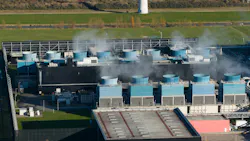
As data center development accelerates across Central Ohio, the City of Columbus is evaluating non-potable water reuse as a strategy to support industrial growth while preserving drinking water supplies.
During a presentation at the American Water Works Association’s ACE26 conference in Washington, D.C., Grace McInerney of the Columbus Division of Water outlined the utility’s ongoing reuse master planning efforts and how growing demand from data centers is influencing long-term water resource planning.
Data centers driving new water planning conversations
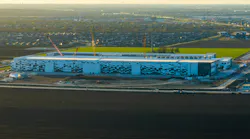
Columbus is one of the fastest-growing regions in the United States, having added more than 100,000 residents between 2010 and 2020. The region is projected to exceed 3 million residents by 2050. At the same time, Central Ohio has emerged as a major data center hub, with the majority of Ohio’s estimated 200 data centers located in the region. Major hyperscale operators including Microsoft, Meta, Google and Amazon have established facilities there, while Intel is developing a large semiconductor manufacturing complex.
McInerney noted that data centers typically seek locations with available land, power, water and fiber infrastructure — conditions that have made Central Ohio attractive for continued expansion.
The rapid growth comes as the region experiences increasing water supply concerns. Columbus experienced back-to-back drought years in 2024 and 2025, including severe drought conditions and the region’s longest late-summer dry spell in more than 80 years.
Reuse identified as a key supply strategy
To address future demand, Columbus is constructing a new 48-mgd Little Walnut Water Plant, planning two additional reservoirs and evaluating new groundwater sources. The utility is also developing a non-potable water reuse master plan with support from CDM Smith.
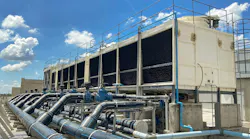
The study focuses on using treated wastewater effluent as a source for industrial reuse applications, including cooling water for data centers, industrial processes and irrigation. According to McInerney, reuse can help extend freshwater supplies while improving water security, sustainability and resilience.
As part of the study, Columbus conducted a market analysis to identify potential recycled water customers. Data centers ranked among the strongest candidates for reuse adoption, reflecting both their substantial cooling demands and corporate sustainability goals. McInerney said hyperscale operators have expressed interest in using recycled water when it is available.
Evaluating a centralized reuse system
The utility has identified several potential reuse service areas and is focusing on a centralized reuse concept at its Southerly Water Reclamation Facility. The concept would divert treated effluent from the facility into a dedicated advanced treatment system before distributing reclaimed water through a purple-pipe network to industrial users.
Current planning envisions a facility capable of producing between 20 and 40 mgd of reclaimed water. Columbus is evaluating multiple treatment levels ranging from disinfection-only treatment to advanced treatment that includes ultrafiltration, reverse osmosis and disinfection to meet varying industrial water quality requirements.
The utility is also examining regulatory requirements, source-water quality, customer demand and operational considerations. Over the next six to nine months, Columbus plans to develop a regulatory roadmap, continue water quality sampling and stakeholder outreach, and determine next steps for project development. If planning efforts continue as expected, the city could issue a request for proposals for detailed design services in 2027.
McInerney said the utility's focus is ensuring that continued economic growth can be supported without compromising long-term water reliability, noting that the influx of large industrial users has prompted utilities to ask whether existing water supplies can continue to meet future demand.
About the Author
 Mandy Crispin
Mandy Crispin
Head of Content
Mandy Crispin is the editor-in-chief of WaterWorld magazine and co-host of water industry podcast Talking Under Water. She can be reached at [email protected].
 Alex Cossin
Alex Cossin
Associate Editor
Alex Cossin is the associate editor for Waterworld Magazine, Wastewater Digest and Stormwater Solutions, which compose the Endeavor Business Media Water Group. Cossin graduated from Kent State University in 2018 with a Bachelor of Science in Journalism. Cossin can be reached at [email protected].