From wastewater to tap: Lessons from Europe's first direct potable reuse scheme
Key Highlights
- Global water demand is expected to increase by 25% by 2050, intensifying the need for innovative solutions like DPR to combat water scarcity.
- Namibia's Windhoek plant pioneered direct potable reuse in 2002, supplying up to 35% of the city's drinking water from treated wastewater, setting a global example.
- The USA is expanding DPR with new plants in Texas, Utah, and Florida, driven by drought and rising demand, with regulatory frameworks supporting adoption.
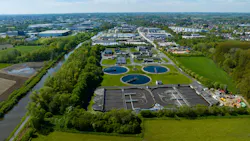
Global water scarcity is an accelerating reality. Reports suggest that a quarter of the world’s population lives in countries experiencing high water stress every year. By 2050, the percentage of people affected by water stress for at least one month every year is predicted to rise to 60%.
Water demand is projected to increase by up to 25% by 2050. For a world already struggling with water stress and scarcity, this presents very real problems. For example, the World Resources Institute (WRI) predicts that as much as 71% of the world’s agriculture (equivalent to $70 trillion) will be exposed to high water stress by 2050, double the levels in 2010. And while some regions will be more exposed than others, the WRI suggests four countries — India, Mexico, Egypt, and Turkey — will account for half of the exposed GDP by that date. That spans four continents.
Adequate availability of clean, usable water is vital for industry and agriculture, as well as for human and environmental health. While conservation, reuse and recycling provide options for reducing consumption in agriculture and industry, drinking water regulations require higher treatment standards and stricter hygiene controls.
The global market for water reuse is projected to reach $30.6 billion by 2030, and direct potable reuse (DPR) is set to become an important part of the reuse toolkit.
Windhoek, Namibia, pioneered direct potable reuse
With scarcity issues on the rise and demand ever-increasing, more countries are looking to DPR to augment drinking water supplies and reduce pressure on freshwater resources. Windhoek's original Goreangab Water Reclamation Plant became the world's first full-scale direct potable reuse facility in 1968. The current New Goreangab Water Reclamation Plant, commissioned in 2002, has a treatment capacity of 21,000 m³/day and can supply up to 35% of the city's drinking water.
US turns to DPR to meet drinking water needs
Where Windhoek pioneered direct potable reuse, the United States is now preparing to follow. As drought, population growth and water scarcity place increasing pressure on groundwater and surface water supplies, El Paso Water is constructing the nation's first direct-to-distribution potable reuse facility. The Pure Water Center will produce up to 10 million gallons of purified drinking water per day, providing El Paso with a drought-resilient water supply while serving as a model for future DPR projects in the United States.
Elsewhere, demonstration projects are operating in Utah (Pure SoJo) and Florida, where the non-membrane-based pureALTA advanced treatment process is being evaluated. Several additional DPR projects are under development across the United States. Meanwhile, Colorado and California have adopted statewide direct potable reuse regulations, providing clear regulatory pathways for public water systems pursuing DPR.

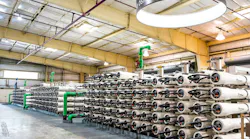
Why does Europe need DPR?
Europe is a continent of weather extremes. It might not seem that way, but parts of Europe are becoming drier while other parts are getting wetter. Some areas that might traditionally seem far from danger are actually facing water-stressed realities. Belgium is really a good example of this.
Due to population density, Belgium, and specifically the region of Flanders, ranks among Europe’s top five most water-stressed areas. The pressure is leading forward-thinking utilities in the region to look beyond traditional water sources. Increasingly, they are looking to reuse to meet demand. Now, one venture has become the first to operate a DPR facility at the Water Production Centre (WPC) at Hofstade, in Aalst.
Hofstade becomes Europe’s first commercial DPR plant
Using treated municipal wastewater effluent, the plant produces over 400 million litres of drinking water per year, supplying approximately 12,000 people. The project was developed by Waterunie, a joint venture of Flemish drinking water utilities Farys and De Watergroep, in collaboration with Belgian water specialist Nuoro, Aquafin and the CAPTURE research platform. bNovate was brought into the project as specialists in online microbiological water monitoring to provide continuous quality assurance via their BactoSense system.
Achieving DPR standards at Hofstade
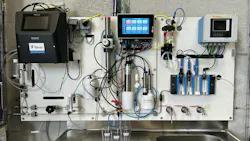
To achieve potable standards, the Hofstade plant employs a rigorous multi-barrier treatment train. Secondary effluent from an existing onsite municipal wastewater treatment plant passes through microsieves before undergoing ultrafiltration (UF) and a two-stage reverse osmosis (RO) system. This is followed by UV disinfection, activated carbon filtration (ACF), and a final step of UV and post-chlorination.
The online microbial monitoring system is installed at the end of the treatment train, just before water enters the distribution network, where it monitors total cell count in near real time.
While the physical and chemical barriers are robust, DPR projects must clear the greater hurdles of risk management, regulatory assurance, and public trust, which means robust testing is vital.
Because the Hofstade project was pioneering — it won the Water Reuse Europe Innovation Prize 2025 — it faced intense regulatory and public scrutiny. Operators were required to submit a Water Safety Plan and a detailed risk analysis. This was critical for risk mitigation and building trust. After all, for people to trust you, you need to demonstrate that you have full control over your water system at all times. And you also need to demonstrate that you can respond immediately if something goes wrong.
Traditional water quality testing relies on ISO-standard plate tests, which require two to three days of laboratory incubation. Factoring in sampling, transportation, and reporting, utilities can realistically wait three to five days for actionable results. For a facility continuously pumping purified wastewater into a high-pressure drinking water network, a multi-day blind spot poses a significant operational risk.
Digital microbiology
To address these risks, WPC Hofstade selected an online flow cytometry system to provide continuous, digital microbiological monitoring. Installed at the tail-end of the treatment process, just before the purified water enters the distribution network, the automated online monitor measures microbial cell counts.
The monitoring system uses flow cytometry to analyze microorganisms one cell at a time. Flow cytometry can provide a more sensitive picture than standard plate counts by detecting changes in microbial community composition that may indicate system instability or early contamination.
One of the main benefits is the ability to perform microbial monitoring at intervals as short as 30 minutes, with hardware that plugs directly into the water pipe and which is seamlessly integrated with the plant's SCADA system. At Hofstade, monitoring occurs every four hours.
Bart De Gusseme, senior expert, Innovation Water, Farys, has years of experience in all kinds of microbial monitoring technology, with a special focus on flow cytometry. He is an expert in flow cytometry.
He highlighted the operational and strategic impact of this technology on the project saying, “We chose BactoSense for our drinking water production centres (WPCs) using membrane filtration, because having continuous insight into the microbiological quality of the produced drinking water is essential. In the DPR scheme of WPC Hofstade, online bacterial monitoring allows us to trend the normal and historical baseline of total cell concentration (TCC) in real-time."
Reassuring the public
Demonstration projects in the United States have shown that DPR projects face not only a test of their technological capabilities but also of their ability to reassure the public that the water they produce is clean and free of pathogens — i.e. that it offers no health risks.
Continuous online flow cytometry provides an additional level of reassurance by reducing the time required to verify microbiological water quality. It transforms microbiology from a retrospective laboratory exercise into a continuously controlled operational parameter.
While online monitoring is not intended to replace required laboratory testing, it enables Hofstade’s plant operators to detect abnormal shifts in water quality within 20 minutes rather than days.
The monitoring system features a multi-stage alarm cascade that can trigger immediate investigations. It can even automatically shut down operations, providing a critical layer of active risk mitigation.
As De Gusseme explained, “Not only does this help us to safeguard the outgoing water quality, but it also fosters confidence in potable reuse as a safe drinking water source.”
Beyond this, Hofstade’s integration of industrial-grade flow cytometry has the potential for significant economic and operational returns. Unforeseen plant downtime or public health scares can harm the business case for a DPR project. Continuous online monitoring prevents these surprises.
Regulation and resilience drive DPR in Europe
As the European Water Reuse Regulation takes hold and institutional awareness of DPR grows, projects like WPC Hofstade are set to establish the new standard for water resilience. However, for DPR to scale across the continent, technological performance must be paired with transparent regulation and public trust.
By making advanced flow cytometry more accessible for routine utility operations, bringing it out of the research lab and into the hands of plant operators, the water industry is helping utilities obtain more frequent microbiological data. The digitalisation of microbiology provides real-time assurance, securing the pathway to a climate-resilient, circular water economy.
As the U.S. accelerates DPR adoption to provide drinking water in areas suffering from high levels of water stress, it seems the only barriers remaining are regulations and public trust. Namibia has shown that DPR can be a long-term solution to meeting drinking water needs, and as droughts and extreme weather events increase in frequency and severity across Europe, it seems a logical step to explore this technology further.
WPC Hofstade demonstrates one approach to implementing DPR in Europe and how it can win over regulators, utilities, investors, and the public.
About the Author
 Luigino Grasso
Luigino Grasso
Dr Luigino Grasso is CTO at bNovate Technologies.