Collaborative capital project management creating effective water infrastructure
Key Highlights
- Implementation of Trimble asset lifecycle management software improved project controls, collaboration, and reporting consistency across water agencies.
- Real-time data access and integrated dashboards enable stakeholders to make informed decisions, reducing delays and cost overruns.
- Major projects like the Horizon Lateral Program enhance regional water security by adding transmission capacity and redundancy.
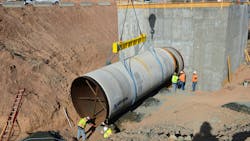
Operational efficiency is critical when you’re responsible for delivering quality, reliable drinking water to one of the world's most dynamic communities in one of the driest locations in the nation.
GIS-centric asset lifecycle management software can help water and wastewater agencies effectively address capital program and construction project management challenges.
Deployment of industry-leading solutions – like those from Trimble – helped reduce risk, enhance collaboration, and improve outcomes for the large, innovative water agencies in Southern Nevada.
Home to approximately 2.3 million residents, Clark County, Nevada sits amid a broad Mojave Desert basin surrounded by rugged mountain ranges. Receiving an average of only four inches of rain per year, the neon-lit county seat, Las Vegas, is one of the driest metropolitan areas in the nation. The area is a travel destination for more than 41 million annual visitors and serves as the state’s economic engine.
As the wholesale water provider, the Southern Nevada Water Authority (SNWA) is responsible for water treatment and delivery for the region, as well as acquiring and managing long-term water resources. The Las Vegas Valley Water District (LVVWD) is the largest retail water utility in the region, serving the city of Las Vegas and areas of unincorporated Clark County. LVVWD also serves as the managing agent for SNWA, which is comprised of seven-member water and wastewater agencies: LVVWD, Big Bend Water District, Boulder City, Clark County Water Reclamation, and the cities of Henderson, Las Vegas, and North Las Vegas.
Over the decades, periods of extraordinary growth and community development led to challenges with building, managing and maintaining water delivery systems. Most of the community’s water comes from the Colorado River through the Lake Mead reservoir. SNWA has a treatment capacity of 900 million gallons per day and maintaining water supply consistency and operational integrity is paramount.
In 2018, SNWA and LVVWD implemented Trimble asset lifecycle management software for capital program and construction project management.
Previously, the two water agencies were using project management applications developed in-house to meet specific project schedule, scope, quality and budget needs. While the separate systems worked well for individual departments, they were siloed and inconsistent, utilizing different processes, methods, and integrations with the agencies’ finance department.
The need for reporting consistency was obvious, and it served as the primary motivation for adopting a single, system-wide solution. The goal was to enhance schedule controls, budget controls, and scope controls while improving overall quality and efficiency.
Deployment of a universal platform would enhance collaboration, reduce risk, and improve project outcomes across the entire business enterprise. Implementing Trimble software solutions allowed the team to establish quality control hold point in workflows, giving stakeholders the ability to review processes and make sure that the intent of a project is being met before going to bid with a contractor. The widespread access to real-time data also helped reduce risk, rework, delays, and cost overruns with end-to-end project controls.
Centralized and standardized capital project planning processes also created efficiencies across the entire design-build lifecycle, helping to facilitate a smooth transition to the operation phase. Strategic coordination and process optimization have led to greater efficiency, transparency, and enhanced water security for a vast urban population.
Solving challenges with quality data and collaboration
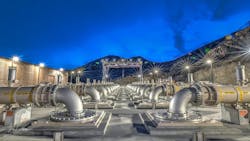
With ongoing drought conditions in the Colorado River Basin, Lake Mead’s elevation fell more than 150 feet during the first eight years of the new millennium. The addition of major capital facilities, including SNWA’s Low Lake Level Pumping Station and a deep-water intake helped to secure access to Southern Nevada’s primary water supplies below Lake Mead’s "dead pool" elevation of 895 feet — the point at which no water can pass through Hoover Dam to generate power or meet downstream water demands.
While those two projects were completed prior to the adoption of integrated capital project management solutions, water supply security is a continuous effort. In fact, in April 2022, the Low Lake Level Pumping Station proved its value after a dramatic drop in the Lake Mead water elevation rendered one of the previous intake pumping stations inoperable.
To continue enhancing the long-term sustainability and overall reliability of Southern Nevada’s regional water system, a new large-scale capital improvement project known as the Horizon Lateral Program is underway. The program includes a package of individual transmission and storage projects that will protect water service for nearly a million existing customers and strengthen SNWA's regional water transmission network.
The estimated $2.4 billion project will add nearly 17 miles of large-diameter transmission pipelines, linking SNWA’s east and west valley transmission networks and providing redundancy to help SNWA meet the community’s current and future water needs.
Digital data and Trimble software solutions are helping the engineering project team determine the most efficient options for the Horizon Lateral Program, including evaluation of the various alignment options for the large-diameter transmission pipeline. The project team also is analyzing captured digital data and digital project management solutions to analyze various scenarios and considerations for the project.
Advanced reporting capabilities
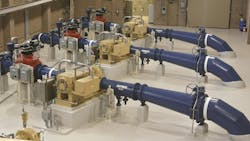
Among the most effective benefits from upgrading to a single-source approach is improved project and programmatic reporting. While there always was some data collection and information sharing previously, the robust dashboards and reporting tools now in place allow key metrics to be efficiently shared across all projects. Integration with business intelligence and data visualization tools – such as Microsoft Power BI – enables the sharing of project status and key performance indicators in near real time.
These capabilities greatly enhance the team’s depth of knowledge and further increase access to project-related information for various stakeholders. Project engineers and project team leaders are sharing key project details with program managers, the engineering department, and executive leadership. Providing the latest data and information in near real-time data is incredibly important as it helps to drive better decision making and more fiscally responsible operations.
Continual improvement
SNWA and LVVWD continue expanding the use of digital solutions to connect data, streamline workflows, and drive efficiency with capital project management. The implementation of these integrated management efforts has delivered significant project improvements. Moving forward, metrics will be utilized to further refine project workflows, prioritize project implementation and timing, and improve budget projections.
SNWA and LVVWD remain committed to the adoption of innovative technology and implementing industry best practices to efficiently serve our customers and community.
About the Author
Peter Jauch
Peter Jauch is director of engineering for the Southern Nevada Water Authority (SNWA) and the Las Vegas Valley Water District (LVVWD).