Crescenta Valley, CA reduces leakage using smart pressure monitoring
Key Highlights
- CVWD faced frequent leaks and pressure surges due to aging pipes and pump operations, prompting a need for better system visibility.
- The district selected Mueller pressure loggers for their affordability, quick deployment, and ease of installation, feeding real-time data into their water management platform.
- Operational changes included staggered pump scheduling, expanded tank levels, and soft starts with VFDs, which immediately stabilized pressure and reduced leaks.
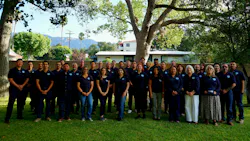
For 75 years, the Crescenta Valley Water District (CVWD) has delivered safe and reliable water service to residents northeast of Los Angeles. Serving 8,500 connections across the rugged Los Angeles foothills, with 11 distinct pressure zones and aging infrastructure, has its challenges.
Gabriel Gomez became System Operations Manager in October 2024 and was promoted to Assistant Director of Operations a year later. He recognized the system lacked visibility into its downstream operations. In November 2024 alone, there were 17 service leaks and three main breaks, resulting in 20 separate incidents requiring emergency response.
"We were looking at ways to make things more efficient, and also to figure out what was happening in the water system," explained Gomez, who had a hunch it had to do with system pressure after managing water systems for over 20 years. While CVWD had SCADA systems monitoring pump stations, they had no visibility into what occurred downstream in the distribution network.
The root cause wasn't simply aging pipes. The district's constant uphill pumping created severe pressure transients. These sudden spikes and drops rippled through the system whenever pumps activated or deactivated. In some areas, pressure swings reached 70 to 80 psi, subjecting pipes, motors, and service connections to mechanical stress.
Selecting the right solution

Drawing on his previous utility experience, Gomez advocated for remote pressure monitoring that was reliable, affordable, and deployable without extensive contractor support. After evaluating multiple vendors, CVWD selected Mueller pressure loggers.
“While other manufacturers took weeks to respond to inquiries, Mueller delivered units within a month of quoting,” said Gomez. “The cost for 11 units, one for each pressure zone, came in significantly lower than competing bids, at approximately $15,000-$20,000 total.”
The loggers are designed for simple installation and CVWD staff deployed all units in-house using existing abandoned sample stations, burying the devices underground with subtle antennas that remained virtually invisible to the public. By October 2025, all 11 units were operational and feeding real-time data into the Sentryx water intelligence platform.
Data-driven operational changes
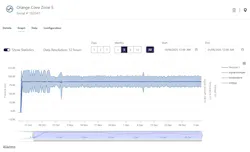
Gomez began overlaying logger data with the district's SCADA system. The graphs revealed massive pressure spikes aligned perfectly with pump activity providing visual proof of the hydraulic trauma the system endured daily.
“We could see quite clearly that the pumps were "slamming" on and off, sending shockwaves through the infrastructure with each cycle,” explained Gomez.
CVWD implemented three operational changes to address the transients:
Staggered Pump Scheduling: Analysis revealed multiple pumps activating simultaneously, causing dramatic pressure surges. Gomez rescheduled the pumps to distribute the hydraulic load over time, preventing compound pressure events.
Expanded Tank Level Ranges: By adjusting the calling levels for storage tanks, the district reduced pump cycling frequency, allowing the system to operate within more stable pressure loads.
Soft Start Installation: To eliminate the "slamming" effect of pumps reaching full power instantaneously, CVWD began installing soft starts and Variable Frequency Drives (VFDs). These allow pumps to ramp up gradually, smoothing pressure transitions throughout the network.
Gomez said, “The impact appeared almost immediately. As pumping operations stabilized, pressure graphs showed increasingly level patterns, and leak frequency began its dramatic decline.”
A stunning ROI
The financial and operational improvements exceeded all expectations. The reduction in leaks followed a clear downward trajectory as the system stabilized in 2025:
- September: 20 total leaks (17 service, 3 main)
- October: 10 total leaks (8 service, 2 main)
- November: 3 total leaks (3 service, 0 main)
- December: 2 total leaks (1 service, 1 main)
- January 2026: 2 total to date (2 service, 0 main)
Gomez estimated each service leak cost between $4,000 and $5,000 to repair when accounting for labor and materials. This calculation doesn't include the 1,000 to 20,000 gallons of water lost per leak event or damage to surrounding infrastructure like pavement and landscaping. Over the three-month period from October through December, CVWD calculated that it avoided repair costs between $100,000-$120,000, by identifying the problem and implementing strategic pressure management.
“We estimate a six to seven times return on the initial $15,000-$20,000 investment,” said Gomez. “The payback period was within in months, not years.”
Beyond immediate cost savings, CVWD has reduced mechanical stress across the entire system. By eliminating pressure transients, the district has also extended the operational life of pumps, motors, pipes, and fittings by reducing wear and tear.
Doubling down with leak detection
The success of the pressure monitors built tremendous confidence in Mueller's technology suite, leading CVWD to launch a pilot program using EchoShore-DX leak monitoring system.
While pressure loggers identified the cause of many leaks i.e. pressure surges, the leak monitoring technology helps identify existing leaks that haven't yet surfaced. The DX nodes are installed on fire hydrants and listen for the acoustic signatures of water escaping from pressurized pipes, helping detect problems before they become visible emergencies.
CVWD plans to begin implementation in early 2026, focusing specifically on Zones 4 and 5, which historically experience the highest leak frequency due to older plastic services and aging mains. The district will handle the installation in-house, as the sensors are easy to install on hydrants.
The combination of pressure management and acoustic monitoring represents a shift at CVWD from reactive "break-fix" operations to a more sustainable proactive infrastructure management.
“By spending less than $20,000 on pressure monitoring, we eliminated over $100,000 in repair costs within a quarter and have significantly reduced leakage,” said Gomez. “I’m looking forward to this next step to see how we can reduce our non-revenue water loss even further with 24-hour leak monitoring.”
CVWD's results offer a proven roadmap: measure what matters, optimize based on data, and invest strategically in technologies that deliver rapid, measurable returns.
About the Author
Steven Smith
Steven Smith is regional manager for Mueller - West. With 25 years of experience in the water industry, Steven collaborates with utilities and dealers throughout the Western United States, providing solutions for leak reduction and pressure management.