Pinellas County turns a smart investment into an even smarter operation
Key Highlights
- Pinellas County Utilities manages water and wastewater for over one million residents, operating multiple treatment plants and extensive reclaimed water infrastructure.
- Initial challenges included manual data entry, fragmented reporting, and underutilization of the WIMS platform, leading to inefficiencies and data discrepancies.
- External assessments revealed gaps and best practices, guiding a phased improvement plan focused on data cleanup, targeted training, and cloud-based system deployment.
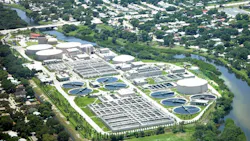
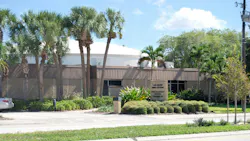
For a large utility managing drinking water and wastewater across multiple treatment plants, data management is the operational backbone of every compliance report, permitting decision, and process optimization. Pinellas County Utilities serves over one million residents in the Tampa Bay region of Florida, operating one water treatment plant and two wastewater treatment facilities, along with reclaimed water infrastructure spanning thousands of miles of pipeline.
Almost 8 years ago, Pinellas implemented Hach WIMS™ (Water Information Management System), a centralized platform designed to consolidate data collection, automate regulatory reporting, and give managers a unified view of plant operations.
More recently, Quentin Jones, Pinellas County Utilities’ Technology Manager, took a closer look at the WIMS environment and discovered places where the teams could maximize the features of the software.
A system with room to scale
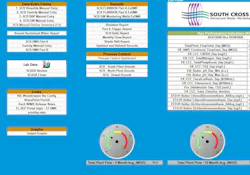
Optimization using WIMS varied at different facilities. At a drinking water plant, operators were collecting data on paper sheets and then manually re-entering it into WIMS separately, effectively double-handling the same information. Monthly operational reports (MORs) were still being generated manually in Excel, a process that consumed hours of staff time and could be automated with the software. Data from years past was buried in dozens of spreadsheet files, with no easy way to retrieve, trend, or analyze it. And a discrepancy between WIMS numbers and SCADA averages had raised questions among operators.
At a wastewater treatment plant, the story was similar: a hybrid of software and Excel represented a genuine start but fell short of the platform's potential. DMR (Discharge Monitoring Report) submissions were still manual, and IT-related VPN constraints meant operators had to juggle two tablets instead of one.
The Water Quality Monitoring team, which serves all county plants and the water distribution system, wasn't using WIMS. Staff there used a work order management system to input and record field sample data, which presented some challenges, and ran everything else on spreadsheets.
One wastewater treatment plant was the exception. The county's largest wastewater plant had built WIMS into its daily workflow in a meaningful way with automated trigger reports, monthly DMR generation, and process trending. Operators said that they couldn't operate without it.
Jones said, “It was clear to me that we needed to standardize the processing of data and reporting for accuracy, consistency, security, and time management.”
The decision that changed everything
Jones's first instinct was to solve it internally. He brought together the SCADA manager and the WIMS administrator and began developing a standardization plan to present to all facilities. About halfway through that process, he stopped.
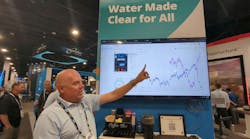
"I thought, 'Why are we doing this? We're not the experts; we should go to the experts', so we called support at Aquatic Informatics (developers of the software in partnership with Hach)," said Jones. “They agreed to come out and spend three days doing a proper facility-by-facility assessment.”
The visits were structured around half a day at each plant, during which they spoke with the people who used the system daily. After each stop, Jones and the technical experts would debrief, comparing what they'd observed, identifying patterns, and noting where one plant's practice might benefit another.
The findings surprised him. "At the end, I was wrong," Jones admitted. "The plant that I thought was using it the best had lots of room for improvement. And the plant that I thought was a little behind was using it perfectly." His assumptions about which facilities were struggling had been inverted. Without the on-site assessment, those assumptions would have driven the improvement plan, and it would have been aimed at the wrong targets.
"The partnership between the experts at Aquatic Informatics and us was the big turning point," said Jones.
Turning the assessment into a plan
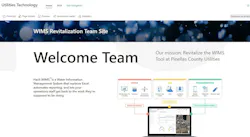
The site-by-site assessment report documented how the software was used at each facility, identified specific gaps and best practices, and outlined concrete next steps. Jones presented the report directly to leadership, reiterating that no new purchase was necessary because the County already owned the software. He was simply presenting a plan to optimize operations using the tools and people the County already had effectively.
The improvement plan ran in three stages. First was data cleanup. Each facility needed to sit down with its designated WIMS champion, who understood the platform well enough to take ownership and review the database, removing redundant variables, stale configurations, and outdated reports, before any new work could be built on top. A free cleanup tool was provided to help administrators get a read on the database before those meetings started.
Second was targeted in-person training, which varied by facility based on the assessment findings. One plant needed help building confidence in WIMS data before operators would trust it over their spreadsheets. Another needed to complete the migration of its custom Excel templates to WIMS. The third, which had the most mature use, needed to designate clearer ownership and start sharing what was working with the other plants.
Third was a pilot of WIMS Rio, the cloud-based evolution of WIMS, starting with the Water Quality Monitoring team. Because this team had no existing WIMS setup, introducing Rio at this facility carried less disruption risk than deploying it at a plant mid-transition. Rio also offered something the standard software setup didn't: mobile access from any device, which mattered for monitoring staff collecting samples in the field. Under Rio's unlimited-user licensing model, staff at other plants could be granted login access as well, allowing them to get comfortable with the interface before committing to deploy it at their facilities.
The third became the proof point for division directors and senior leadership. Operators there said they couldn't live without the software. This made the director's position straightforward: if the largest plant runs this way, everyone should do the same. The standardization push moved from Jones's project to a top-down directive.
Making the case at the plant level
Getting director-level buy-in was one thing, but getting plant managers on board was another. At one facility, the plant manager walked into an early meeting and asked: What is the purpose of this?
Jones pulled the numbers on how many staff hours the plant was spending each month on manual compliance reporting. Then he showed them what the most engaged plant was doing: hitting a button to generate DEP and EPA reports automatically in a fraction of the time. "When they realized the man-hours that were spent on reporting versus the automation tool, which is almost nothing, things changed," Jones said.
That plant had been asking for more people when they were not getting the best out of the people and tools they already had.
Where Pinellas goes from here
The sequencing plan Jones developed after the assessment is a phased transition that reflects operational reality. First, standardize software use and improve data quality. Without clean, trusted data, no modern platform feature delivers its intended value.
The second phase is the structured Rio installation, starting with water quality and expanding as operators at other facilities gain familiarity through shared access. Rio's mobile-first design and real-time dashboards address a consistent theme from the site assessments: younger operators want a modern interface they can access on a tablet or phone in the field, not a workstation-tethered system. Rio provides this without abandoning the data infrastructure the County has spent years building.
The third phase is a broader Rio deployment across facilities, timed to match operational readiness. And a multi-year professional services agreement that provides Pinellas County with a defined cadence of support to push the software's parameters using advanced features to improve efficiency wherever possible. “We know there is a lot more we can do on this platform, from optimizing chemical dosages and reducing energy consumption to improving forecasting. Every time we attend one of the user conferences, we learn how other utilities are using it to improve their facilities and hear about new features. It’s a continual education, and now with a good foundation, we are in a position to continually improve.”
In the case of Pinellas County, technology wasn't the problem, nor was it the solution. What moved things was an honest diagnosis, the right external expertise, and leadership willing to act on what they learned.
"You can buy software from a lot of different places," Jones reflected. "But having the right support is what distinguishes a partnership from a conventional vendor relationship.”
About the Author
Jake Mickelson
Jake Mickelson is an expert in water data management at Aquatic Informatics. He focuses on regulatory reporting, plant optimization, and helping utilities transform operational data into defensible, decision‑ready information that drives measurable performance improvements.