How utilities can prepare for the silver tsunami
Key Highlights
- Up to 50% of water and wastewater professionals are nearing retirement, creating a significant staffing gap.
- Relying solely on passive job postings can delay hiring and reduce candidate quality; proactive recruiting is essential.
- Engaging industry-specific recruiters and building relationships with trade schools can accelerate hiring of qualified operators.
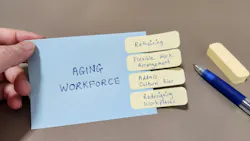
According to the EPA, an estimated 30-50% of veteran water and wastewater professionals across the United States are expected to reach retirement age over the next 5 to 10 years. This looming wave of retirements is creating significant operational concerns for municipalities and utilities that rely on experienced operators, maintenance personnel and technical staff to maintain regulatory compliance and protect public health.
Unfortunately, many organizations continue to approach hiring with outdated strategies that are no longer effective in today’s highly competitive labor market. These common mistakes frequently result in prolonged position vacancies, increased overtime costs, employee burnout and disruptions to plant operations. To successfully address the growing workforce gap, utilities have an opportunity to adopt more proactive and strategic recruiting practices that improve hiring efficiency, strengthen candidate engagement and better position the industry to attract the next generation of water and wastewater professionals before the brunt of the “Grey Tsunami” hits the industry.
Hiring need dictates approach
Matching hiring urgency with the appropriate strategy is critical for utilities that want to recruit talent in an economical way. For continuous recruitment or nonurgent roles, a job posting strategy can be a cost-effective way to attract qualified applicants. Job postings can help organizations to build awareness, generate inbound interest and engage candidates who are actively exploring new opportunities.
However, for an urgent hiring need, relying solely on a job posting can be risky because it is fundamentally a passive recruiting method. The most qualified professionals in many industries are often not actively searching job boards, meaning the utility is reaching a relatively small percentage of active candidates who happen to see and apply to the posting. By solely relying on job boards, utilities risk facing hiring delays, reduced candidate quality and may leave critical positions unfilled for extended periods when speed and precision are essential.
For municipalities and utilities that need to hire water or wastewater operators, having a dedicated talent acquisition staff member can be an effective use of resources. Highly technical positions in the water industry are increasingly difficult to fill through passive hiring methods alone. As an alternative to having a talent acquisition staff member, an outside agency recruiter that specializes in the water and wastewater operator recruiting can be a good choice.
A skilled recruiter can proactively build relationships with licensed operators, trade schools, certification programs, and industry associations while continuously developing a pipeline of qualified talent before openings become critical. This approach reduces vacancy duration, overtime costs, operational strain and compliance risks that often result from being understaffed in essential public utility operations. In a competitive labor market where experienced operators are in high demand and at retirement age, proactive recruiting can significantly improve both the speed and quality of hiring outcomes.
 water industry workforce ehandbook 2024
The downside of the hiring curve
Just as important as selecting the right hiring strategy based upon the urgency of the hiring need is making sure to not to rest on organizational capacity for too long while a department is understaffed.
Operators tend to put their organizations on their shoulders and show up each day (and night) to keep operations running for their communities. But at some point, an acute labor shortage turns into chronic organizational stress.
Consider that one critical vacancy will result in each team member carrying a little bit more of the operational load. In the short term, this may not be a problem, but if this becomes the new normal it can lead to a decrease in morale and an increase in attrition. Losing another team member while seeking to backfill the original role is the downside risk of the hiring curve and can result in organizational crisis, where being understaffed leads to more vacancies as team members burn out. In addition to this short to midterm risk, there is also long term risk if labor believes that this is simply how the organization chooses to operate. Every operator in America can tell you of a plant that they would not work in due to design, safety, management or reputation. Once an organization has a bad reputation, attracting top talent becomes nearly impossible.
Frontend or backend cost to hire
When hiring managers and consultants advise utilities on effective strategies to meet labor needs while attracting top talent, they often present solutions for paying the cost of hiring on the frontend or the backend.
Investing upfront in proactive recruiting, talent acquisition support, competitive compensation analysis and thorough candidate evaluation may appear expensive initially, but the backend costs of making the wrong hire—or leaving a critical position unfilled—are often far greater.
The cost of a bad hire can range from 30 percent to more than 200 percent of the employee’s annual salary when factoring in lost productivity, retraining, turnover, and operational disruption. In water and wastewater utilities specifically, prolonged vacancies frequently lead to excessive overtime expenses, employee fatigue, lower morale, increased safety risks and burnout among existing staff who must absorb additional responsibilities. Utilities operating short-staffed also face increased risks related to compliance violations, delayed maintenance and reduced system reliability.
Ultimately, organizations that attempt to minimize recruiting investment on the frontend often end up paying significantly more on the backend through inefficiency, turnover, and operational strain.
 aging water workforce
Hiring tips in a tight labor market
Hiring in a tight labor market where the demand for qualified talent exceeds supply requires both good process and a bit of creativity to be successful.
With respect to process, highlighting why someone might want to work for and live in the area can be a strong motivator for talent considering a new opportunity. For example, Scottsdale Water through its dedicated “Careers in Scottsdale Water” recruitment page actively promotes its culture, long-term career progression opportunities, certification incentives, apprenticeship programs, and overall quality of life associated with working for the City of Scottsdale.
The utility highlights paid training, tuition support, operator certification bonuses of up to $4,000 annually, merit increases, retirement benefits, and structured advancement pathways for water and wastewater professionals. It also emphasizes investment in modern infrastructure, innovative technology, and workforce development, helping candidates understand they are joining an organization committed to both employee growth and operational excellence. Scottsdale Water takes it one step further by connecting the career opportunity to the broader lifestyle advantages of the Scottsdale area. This type of messaging is effective because it positions the utility as a long-term career destination rather than simply another employer posting an opening.
Also on the process side, make it easy for candidates to apply. How many clicks does it take to apply? Consider the number of clicks it takes to make an Amazon purchase (the answer is 1 and they have a patent!) and compare it to your applicant portal. Each click is just one more bit of friction between top talent and your open role.
On the topic of creativity, given that most plants have multiple shifts, a flexible work schedule that provides more days off than a standard weekend can be very attractive to top talent. Considering the following schedule:
Monday - Thursday: 10 hour shifts
Friday - OFF
Saturday - OFF
Sunday - OFF
Monday - OFF
Tuesday - Friday - 10 hour shifts
Saturday - OFF
Sunday - OFF
This schedule has proven to reduce turnover and burnout. It gives each operator two 4 day weekends per month and can increase retention to near 100%. It can be a win-win that provides candidates with greater work-life flexibility without imposing additional costs on the utility..
Interstate applicants
One often overlooked strategy for addressing workforce shortages in the water and wastewater industry is developing a stronger understanding of interstate operator license reciprocity and how it can expand access to qualified talent pools beyond a utility’s local market.
Many states offer pathways for licensed operators to transfer certifications or obtain equivalent credentials, yet utilities frequently dismiss strong out-of-state candidates because they are unfamiliar with the reciprocity process or assume licensing barriers will be too difficult to overcome. In reality, many reciprocity applications are straightforward when properly managed, allowing utilities to significantly broaden their recruiting reach during a labor shortage.
A knowledgeable recruiter or hiring manager who specializes in the water and wastewater industry can be especially valuable in this process by understanding which states have reciprocal agreements, how licensing requirements compare, what timelines to expect and how to guide candidates through the application process. This expertise helps eliminate uncertainty for both the employer and candidate, reduces hiring delays and allows utilities to confidently pursue experienced professionals they may have otherwise overlooked.
Conclusion
The workforce challenges facing water and wastewater utilities are not simply the result of a shrinking labor pool or a “Grey Tsunami”, but also the consequence of outdated hiring strategies that fail to align with today’s competitive market. Utilities that continue to rely solely on passive recruiting methods, or lengthy hiring timelines, risk increased overtime costs, burnout, declining morale, and long-term operational instability.
Conversely, organizations that invest proactively in recruiting, employer branding, streamlined hiring processes, flexible scheduling and broader candidate outreach—including interstate talent pools—position themselves to compete more effectively for skilled operators. As retirements continue to accelerate across the industry, utilities must recognize that attracting and retaining top talent requires the same level of strategic planning and investment as maintaining critical infrastructure. Those willing to adapt their hiring practices today will be far better prepared to sustain safe, reliable operations for the communities they serve in the years ahead.
About the Author
 Austin Meyermann
Austin Meyermann
Austin Meyermann is President at Hunter-Crown LLC.