The case for integrated non-revenue water management with one partner
Key Highlights
- Aging water pipes in the U.S. cause frequent leaks and significant water loss, costing utilities billions annually and impacting service reliability.
- Integrated solutions like acoustic sensors and condition assessments enable proactive leak detection and targeted pipe rehabilitation, saving costs and extending asset lifespan.
- Continuous monitoring of pressure and flow patterns helps detect anomalies early, reducing emergency repairs and water waste.

When aging pipes, tight budgets, and rising regulatory pressure converge, utilities need more than a collection of point solutions. They need an integrated solution.
The United States has 2.2 million miles of water piping, and a significant share of it is operating past its design life. The consequences are measurable and costly: a pipe breaks every two minutes somewhere in the country, losing six billion gallons of water each day. Across the system, non-revenue water (NRW) loss costs utilities $6.4 billion annually from water that is treated, pumped, and pressurized, yet never billed. For utilities already running lean, those costs impact budget, staff time, and capital spending.
Addressing NRW is not a single-technology problem. Leakage originates from aging mains, pressure surges, failing control valves, and anomalies too subtle for traditional monitoring to catch. Tackling it piecemeal; one vendor for leak detection, another for pressure management, another for condition assessment, fragments data and multiplies integration burdens which can leaves gaps in coverage. The more effective approach is consolidation: a single provider with solutions designed to work together across the full pipeline lifecycle.
Determine what your pipes are telling you
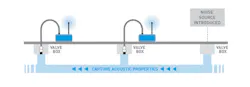
The first challenge in reducing NRW is prioritization. With thousands of miles of underground assets and limited field crews, decisions about where to dig and where not to dig, carry real financial weight. Proactive pipeline management solutions can address this using non-invasive acoustic leak detection and condition assessment technologies that measure pipe health without service disruption.
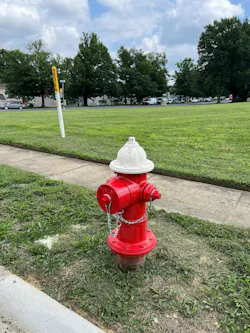
Tools like the EchoShore-DX system provide continuous leak monitoring of distribution mains, using acoustic analysis to flag leaks, their severity, and location in real time. The Metropolitan Utilities District (M.U.D.) in Omaha deployed 1,200 acoustic sensors on hydrants in late 2024. Despite early challenges the system identified 35 potential leak events in its first month alone, confirming 17 leaks. To date, approximately 78 leaks have been found, with 50 on water mains addressed as scheduled rather than emergency repairs, saving M.U.D. an estimated $500,000 and delivering on the utility's core goal of preventing costly, disruptive main bursts.
ePulse condition assessment service is another tool that complements leak monitoring by assessing the structural condition of specific pipe segments without excavation, allowing utilities to distinguish pipes that need immediate replacement from those that can be safely maintained for years, sometimes beyond expected life. For example, the City of Minnetonka used the service to evaluate 12,500 feet (30 segments) of aging 18-inch water main ahead of a county road resurfacing project that would trigger a 20-year excavation moratorium. The survey was completed in just three field days and showed 44% of segments in good condition (less than 10% wall thickness loss), 47% in moderate condition (10–30% loss), and none in poor condition. The City then extrapolated degradation trends over 20 years to identify which moderate-condition segments were likely to deteriorate to poor condition during the moratorium period. Using combined current/projected data they were able to make targeted rehabilitation and replacement decisions before the road work locked them out for two decades.
Together, these acoustic technologies shift capital planning from reactive guesswork to evidence-based decision-making, extending asset lifespans, reducing emergency repair costs, and improving confidence in investment decisions.
Detect losses before they become crises
Knowing a pipe is aging is not the same as knowing it is leaking today. Water loss management solutions bridge that gap with continuous monitoring of leak signals, pressure behavior, and flow patterns, providing the early warning needed to intervene before a small anomaly becomes a major system event.
Automated detection of unusual night flows, pressure anomalies, and usage patterns enables field teams to act on the highest-priority locations first, rather than responding after a burst has already disrupted service and impacts residents and businesses. Burst detection alerts can be delivered via email and SMS, so that when failures do occur, response times are immediate, or as quickly as possible. The result is a measurable reduction in water loss, lower energy costs from unnecessary pumping and treatment, and stronger performance.
Control pressure, control losses

Pressure is one of the most underappreciated drivers of NRW. Unmanaged fluctuations accelerate pipe fatigue, trigger leaks at weak joints, and drive the burst events that cause the most visible and costly failures. Traditional control valves operate without the real-time visibility needed to intervene before damage occurs. The Singer® Rx Series changes that.
It combines the hydraulic precision of Singer control valves with the advanced pressure management capabilities of the Echologics® platform, providing continuous, real-time monitoring of both the control valve and the broader network in a single integrated package. Pilot valve and system control algorithms allow remote adjustment and automatic pressure optimization ensuring uniform, stable hydraulic control even at very low flow conditions.
The setup allows utilities to monitor and log pressure in an entire network and adjust the pressure in critical areas to meet regulatory requirements. The system integrates seamlessly with existing SCADA infrastructure, reducing maintenance calls, extending valve life, and preventing the pressure pulses that quietly drive leakage upward year after year.
In addition, the Singer control valves have a single rolling diaphragm (SRD) designed to provide smooth, steady, and precise pressure control from maximum to virtually zero flow, without the need for low-flow bypass valves. The effective area of the single rolling diaphragm remains constant, so the bonnet is much smaller and lighter than flat diaphragms. The SRD provides a measured quantity of water in the bonnet control chamber maintaining the same smooth movement of the inner valve through the entire stroke. By eliminating seat chatter at low flows, the SRD avoids injecting small pressure pulses into the piping, which, over time, may increase leakage, losses, or pipe bursts.
The advantage of integration
Each of these solutions deliver value independently. But their greatest impact is realized when they are deployed together, under a unified framework such as the Sentryx™ Water Intelligent platform. Condition data from pipeline assessments informs leak detection priorities. Pressure management insights surface risks that condition assessments can then investigate. Water loss monitoring confirms whether pressure interventions are achieving measurable results. The feedback loop closes and utilities gain a coherent, system-wide picture of infrastructure health and what is required to improve efficiencies.
This integration also reduces the operational overhead that comes with managing multiple vendor relationships, disparate data platforms, and incompatible reporting formats. When one provider is accountable for the full solution set, typically troubleshooting is faster, implementation is smoother, and the path from data to decision is shorter.
For utilities navigating aging infrastructure, constrained budgets, and growing service demands, knowing how to invest most effectively is crucial. A consolidated solution with a data-driven platform that brings proactive pipeline management, water loss management, and intelligent pressure control together, can be much more efficient. Not three tools, but rather one network.
About the Author
 Kanishk Noel
Kanishk Noel
Kanishk Noel is senior director, intelligent networks with Mueller.