Key Highlights
- Utilities are shifting from reactive repairs to risk-based planning by leveraging asset management systems and predictive analytics.
- Invisibility of underground infrastructure often leads to delayed maintenance until catastrophic failure occurs, increasing costs.
- Financial and political challenges hinder infrastructure investment; transparent rate increases and community engagement can improve funding stability.
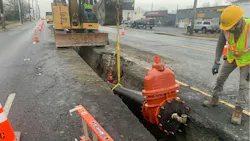
Across the country, municipal water and wastewater systems are aging faster than many communities can afford to replace them. Utilities face rising costs, stricter regulations, emerging contaminants, and growing public expectations while operating within tight financial constraints. Yet, as a result of these complex conditions, many municipalities are forced to approach infrastructure investment by waiting until something breaks.
A transmission main fails, reallocation of funds needs to be executed. A treatment plant is found to violate regulations, and upgrades are rushed into design. Sewer overflows trigger capital improvements that had been deferred for years. In many communities, infrastructure spending becomes reactive by necessity rather than proactive by strategy.
This inevitably creates a “break-first” culture that has understandably become deeply embedded across much of the water industry. Utilities and governing bodies have grown accustomed to prioritizing visible emergencies over invisible deterioration, creating a cycle in which crisis response overrides long-term planning.
The greatest challenge facing water infrastructure may be the industry’s involuntary acceptance of reactive decision-making as the default operating model. Breaking that cycle requires utilities to rethink how they identify, prioritize, communicate, and fund infrastructure risks.
The problem with invisible infrastructure
Water systems operate underground, behind walls, and out of public view. Unlike roads, schools, or public buildings, most utility infrastructure remains hidden until failure disrupts daily life. That invisibility creates a serious prioritization problem for municipalities competing for increasingly limited resources. A deteriorating road generates immediate complaints. A corroding water main does not.
Buried infrastructure often receives attention only after catastrophic failure forces action.
Many utilities also lack complete information about the systems they manage. Pipes installed decades ago may have incomplete records, unknown materials, or undocumented repairs. In some communities, leaders have lacked sufficient funding and staffing to confidently identify the age, condition, or exact location of critical infrastructure assets.
Utilities are increasingly addressing this challenge through asset management systems, hydraulic modeling, and predictive analytics. Pressure loggers and digital mapping tools help municipalities identify recurring vulnerabilities. More importantly, these tools help utilities translate hidden risks into understandable metrics. When communities can clearly see the probability and consequences of failure, the conversation shifts from emergency repair to preventive investment. That visibility becomes especially important because repeated emergencies often consume the very resources utilities need to plan.
When emergency work replaces strategic planning
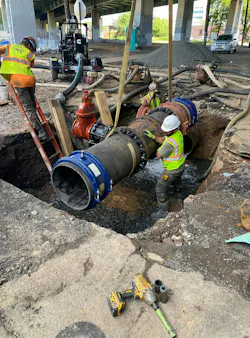
Every utility experiences infrastructure failures. The problem arises when emergency response becomes the unavoidable primary framework for system management. Water main breaks, pump failures, and emergency treatment issues divert funding, staff time, contractor availability, and operational focus away from planned capital improvements. Emergency repairs cost far more than planned replacements because contractors must mobilize quickly, and crews often work extended hours to restore service.
Over time, this creates a structural imbalance. Planned infrastructure programs continually lose ground to immediate operational crises, reinforcing the break-first cycle utilities are trying to escape. The industry increasingly recognizes that reactive prioritization is unsustainable. Instead of waiting for failure to dictate investment decisions, utilities are moving toward risk-based planning models that evaluate both the probability and consequences of failure.
Critical assets such as transmission mains, pump stations, force mains, and treatment components can then be prioritized not simply because they are old, but because their failure would create widespread operational, environmental, or public health impacts. Preventive replacement strategies and lifecycle-based maintenance schedules help utilities reduce the number of emergencies competing for limited resources. Still, effective prioritization depends on having reliable information about system conditions in the first place.
The cost of incomplete system knowledge
Many municipalities are making infrastructure decisions with fragmented or outdated information. Decades of undocumented repairs, inconsistent mapping standards, and incomplete historical records leave utilities with significant blind spots. Some systems have evolved over generations without centralized documentation, making it difficult to understand network vulnerabilities fully.
Building digital infrastructure models is increasingly essential for long-term resilience. Integrating GIS mapping, break histories, pressure monitoring, and hydraulic simulations enables utilities to understand system vulnerabilities better. Rather than relying on blanket replacement programs that strain already-limited budgets, municipalities can use data to target the highest-risk areas first.
Predictive analytics also improves long-term financial planning. Utilities gain a clearer understanding of future capital needs, allowing them to phase projects more strategically and reduce the volatility caused by recurring emergencies. Yet even the best data cannot eliminate one of the most persistent barriers to proactive infrastructure investment: financial pressures that create resistance to raising rates.
The politics behind deferred infrastructure
Rate increases remain among the most difficult conversations in the water sector. Elected officials often face strong pressure to keep municipal budgets balanced, even when infrastructure systems are clearly underfunded. In many communities, rates have not kept pace with inflation, construction costs, or regulatory obligations for years.
The result is predictable. Deferred maintenance grows, replacement programs shrink, and systems continue aging until emergencies force more expensive interventions. Some municipalities eventually exhaust their bonding capacity while trying to keep up with replacement demands. Others turn to privatization because they can no longer financially sustain escalating infrastructure obligations and unfunded mandates.
Utilities are finding greater success when rate discussions are framed around reliability and risk reduction rather than simply infrastructure spending. Residents understand the impacts of service interruptions, flooding, environmental violations, and declining water quality.
Gradual, predictable rate increases paired with transparent communication can build greater public trust over time. Demonstrating how investments reduce outages and prevent future emergencies makes infrastructure funding easier to defend politically. Those conversations are becoming even more urgent as utilities face rapidly emerging contaminant regulations and increasingly expensive treatment requirements.

Emerging contaminants and regulatory pressure
Emerging contaminants, such as PFAS compounds, are forcing utilities to make major infrastructure decisions amid significant uncertainty. Treatment technologies continue evolving rapidly, but implementation is rarely straightforward. Naturally occurring elements such as iron, ammonia, and magnesium can interfere with treatment performance, often requiring additional pretreatment steps or extended pilot testing.
Utilities are under pressure to comply with tightening standards while also avoiding premature investments in technologies that may quickly become outdated. That challenge reinforces the importance of flexible infrastructure planning. Pilot testing, phased implementation strategies, and adaptable facility designs allow municipalities to evaluate treatment effectiveness before committing to large-scale permanent systems. This flexibility is especially important for smaller municipalities with limited staff and funding.
Why regional collaboration matters
The fragmentation of municipal water systems remains a major challenge across the industry. Thousands of small utilities continue to operate independently, with limited staffing, aging infrastructure, and constrained financial resources. Regional collaboration offers one path toward greater resilience.
Shared service agreements, joint treatment facilities, and regional asset management programs allow municipalities to pool expertise, reduce operational costs, and improve long-term planning capacity.
Some communities are also exploring alternative funding strategies and emerging technologies such as artificial intelligence to streamline planning efforts. These tools alone will not solve the industry’s infrastructure challenges, but they can help utilities operate more efficiently while freeing resources for higher-priority risks.
Moving beyond the break-first culture
For decades, much of the water sector has operated under an implicit assumption that infrastructure investments will occur only after failures become unavoidable. That approach may have been manageable in an era of slower regulatory change and lower capital costs, but today’s pressures demand a different strategy.
The path forward lies in replacing emergency-driven management with risk-driven management. That means improving system visibility, building stronger asset data, prioritizing investments based on failure consequences, and engaging communities in transparent conversations about infrastructure funding.
Most importantly, it means recognizing that infrastructure failure is not simply an engineering problem. It is often the result of governance habits that reward short-term reaction over long-term planning.
Communities that continue operating within a break-first culture will face rising costs and increasing disruptions. Those that embrace proactive planning and strategic investment will be better positioned to build resilient systems and position themselves to receive funding and grants as well. The future of water infrastructure will not be defined by how quickly utilities repair broken systems. It will be defined by how effectively they prevent those systems from breaking in the first place.
About the Author
Stephanie Cuthbert
Principal and Executive Vice President Water & Wastewater Division with Remington & Vernick Engineers
Stephanie Cuthbert, P.E., C.M.E. is Water Practice Director, Northeast with Remington & Vernick Engineers, An Ardurra Company. She can be reached at [email protected].