Every drop matters: Rethinking water infrastructure in Southern Nevada
Key Highlights
- SNWA and LVVWD merged engineering operations in 2018 to implement Trimble Unity, creating a unified digital environment for project lifecycle management.
- Real-time data access and embedded quality control checkpoints have reduced rework, delays, and costs while improving project transparency and stakeholder communication.
- Enhanced reporting and integration with business intelligence tools provide comprehensive visibility into project performance, fostering accountability and effective governance.
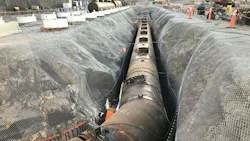
In Clark County, Nevada, where more than 2.3 million residents and over 41 million annual visitors depend on a limited water supply, the Southern Nevada Water Authority (SNWA) and the Las Vegas Valley Water District (LVVWD) have transformed how capital projects are planned, delivered and managed. Their journey shows how asset lifecycle management, powered by integrated digital solutions, can drive efficiency, reduce risk and strengthen long-term water security.
As the wholesale water provider, SNWA is responsible for water treatment, delivery to local water purveyors, and resource management across the region. The agency has a treatment capacity of 900 million gallons per day. LVVWD serves as the largest purveyor, delivering water throughout metropolitan Las Vegas and surrounding areas. LVVWD is also the managing agent for SNWA. Together with several member agencies, they manage a complex, high-demand utility in one of the most arid environments in North America.
The hidden cost of fragmentation
Historically, rapid population growth and continuous development placed increasing strain on infrastructure planning and delivery. Much of the region’s water is sourced from the Colorado River via Lake Mead, where declining water levels have intensified the urgency for resilient and efficient network management. Maintaining water supply consistency and operational integrity is paramount.
Before 2018, both SNWA and LVVWD relied on internally developed project management applications tailored to specific departmental needs. While functional in isolation, these processes created fragmentation throughout the organization.
“We had multiple systems that worked independently but not together, creating inconsistencies in workflows, reporting and financial interactions,” said Peter Jauch, director of engineering at SNWA and LVVWD. “The lack of standardization made it difficult to maintain control over scope, schedule and budget at a program level.”
Strategic synchronization
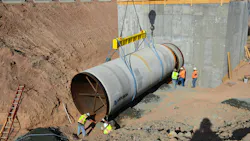
Recognizing the need for a unified approach, SNWA and LVVWD merged engineering operations in 2018 and implemented Trimble Unity, an asset lifecycle management solution. The objective was to establish a single source of truth for capital program and construction project management while improving collaboration, transparency and accountability.
The transition to a connected platform enabled standardized processes across the entire capital project lifecycle. From planning and design through construction and handoff to operations, teams now operate within a cohesive digital environment. This has significantly improved coordination between departments and stakeholders, ensuring that projects align with strategic objectives and regulatory requirements.
Insight at every stage
A key advantage of Trimble Unity is its ability to embed quality control checkpoints within workflows. These hold points allow stakeholders to review project progress and validate that design intent and performance criteria are met before advancing to the next phase. By catching issues early, the SNWA and LVVWD have reduced rework, delays and cost overruns.
Equally important is the availability of real-time data. With centralized access to project information, teams can make informed decisions quickly and with greater confidence. This has proven especially valuable in a region where environmental conditions and water availability can shift rapidly.
“Having near real-time access to consistent, reliable data has transformed how we manage projects and communicate with stakeholders,” Jauch said. “It allows us to maintain alignment with all the organization’s activities and ensure fiscal responsibility.”
The benefits extend beyond internal operations. Enhanced reporting capabilities now provide visibility into all projects and programs. Compatibility with business intelligence tools such as Microsoft Power BI enables dynamic dashboards that deliver up-to-date insights on key performance indicators.
This level of transparency ensures that everyone from project engineers to executive leadership and board members has access to the same information. It fosters accountability and supports more effective governance of large-scale capital investments.
Adapting to a new reality
The value of end-to-end asset lifecycle management becomes even more evident when responding to external challenges. Ongoing drought conditions in the Colorado River Basin have significantly reduced Lake Mead’s water levels, dropping more than 150 feet since drought conditions began in the early 2000s. These conditions require continuous adaptation and investment in infrastructure.
Major projects such as the Low Lake Level Pumping Station and a third intake structure were completed prior to the implementation of the Trimble solution. However, the need for ongoing adjustments to manage large-scale capital projects has only increased.
Sustainability at scale
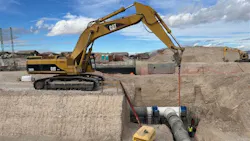
Today, SNWA and LVVWD are undertaking a $2.4 billion capital improvement project designed to enhance water delivery reliability. The initiative includes approximately 17 miles of large-diameter pipeline, along with new pump stations and storage reservoirs to provide a secondary water supply feed to southern Clark County.
Digital data and advanced modeling capabilities are central to this effort. Project teams are evaluating multiple routing scenarios, including options through developed urban areas or environmentally sensitive regions. By leveraging comprehensive project management tools and data analytics, they can assess impacts, optimize design decisions and ensure long-term sustainability.
This data-driven approach reflects a broader shift toward proactive and strategic asset management. Rather than reacting to challenges, SNWA and LVVWD are using technology to anticipate risks, optimize investments and improve outcomes.
The implementation of Trimble Unity has also created efficiencies that extend into operations. Standardized data and processes ensure a seamless transition from construction to ongoing maintenance, supporting better asset performance over time. Matching capital projects with operational needs is critical for maximizing the value of infrastructure investments.
Future-ready water infrastructure
Continuous improvement remains a core focus. SNWA and LVVWD are expanding their use of digital tools to further refine workflows, enhance budget forecasting and prioritize projects based on performance metrics. By leveraging data at every stage of the lifecycle, they are building a more flexible water system.
The success achieved in Southern Nevada offers valuable lessons for water utilities nationwide. As climate pressures intensify and demand continues to grow, the need for smarter, more connected infrastructure management will only become more urgent.
About the Author
Jarrod Gerbaud
Jarrod Gerbaud is water industry expert with Trimble.