Flowing forward: Applied research, workforce training, and community outreach at The Water Tower
Key Highlights
- The Water Tower conducts cutting-edge research on emerging contaminants like PFAS and unregulated disinfection by-products to improve water safety and treatment methods.
- Workforce development initiatives, including the Excellence in Training program, aim to equip water professionals with effective teaching skills and promote long-term retention.
- Community outreach efforts, such as the Water Needs You campaign, help attract diverse talent by making water careers more accessible and understandable to the public.
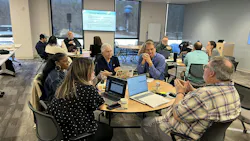
With the water sector navigating significant transitions around workforce retirements, evolving technologies, and regulatory demands, meeting these challenges requires more than isolated programs. It requires a comprehensive approach to recruitment, training, and retention, alongside applied research that is accessible to utilities and responsive to the issues they face.
At The Water Tower (TWT), a nonprofit global water innovation hub located in Gwinnett County, Georgia, these priorities increasingly intersect with community and industry engagement. Through the development of training programs, extensive research efforts, and collaboration with community partners, The Water Tower is helping translate emerging needs into practical solutions and keep the water sector flowing forward.
Applied research
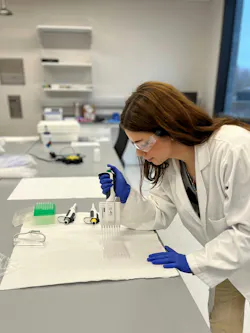
The Water Tower's research strives to support utilities with research results that can be applied to improve management of our water resources. Besides current high-priority issues, The Water Tower researchers work to get ahead of tomorrow’s challenges for the water industry.
Per- and Poly-fluorinated alkyl substances (PFAS) and total organic fluorine method development
The Water Tower conducts research on the fate of PFAS in water systems. We are currently working with industry partners on the development of new analytical methods for evaluating total organic fluorine in source waters, wastewater, and biosolids. These types of measurements can provide a broad estimate of all organo-fluorine molecules in a sample and are less costly than analyzing samples for individual PFAS compounds.
Research on emerging issues — Unregulated disinfection by-products (DBPs) and pathogens
Drinking water disinfection is a delicate balance involving the optimization of disinfectant levels to maximize pathogen reduction while minimizing the formation of DBPs. EPA currently regulates some DBPs including a group of four trihalomethanes and a group of five haloacetic acids. Numerous other DBPs have been discovered over the past decade and are beginning to emerge as potential risks for some water systems. Some of these unregulated DBPs may pose more of a health risk than the DBPs currently regulated. The Water Tower researchers are partnering with industry and academia to develop new analytical methods for unregulated DBPs, evaluate toxicity and occurrence information, and test new treatment technologies for removing the constituents that lead to the creation of DBPs during the water treatment and distribution process. The Water Tower also conducts research on the detection of pathogens that can hide in water distribution systems such as Legionella pneumophila, which can cause severe respiratory problems.
Practical applications of innovative technologies to address treatment and distribution challenges
In addition to our laboratory resources, The Water Tower has a Technology Demonstration Area (TDA) where real flows can be used for treatment experiments. These flows include primary, secondary, and advanced treated effluent. The Technology Demonstration Area has multiple ports for the flows, power, and sewage connections for running technology demonstrations. Storage tanks also facilitate testing and evaluation of other water sources such as industrial wastewater. One of the biggest challenges for new technologies is making the transition from a laboratory setting to full-scale implementation. The Technology Demonstration Area can help facilitate that transition. The Water Tower can also coordinate with our utility and engineering firm partners to make the final steps towards on-site demonstrations and eventually full-scale success. Demonstration projects have included metering technologies using our outdoor pipe network, evaluation of a new nanofiltration technology for drinking water, and testing of a new cloth filter for small wastewater systems.
Science and Engineering Results — Knowledge Transfer
The Water Tower researchers work with our Workforce Training group to integrate scientific training into our education programs. Trainees in the certified operator program have access to our laboratories, where they learn how testing is done by utilities for operations and compliance purposes. Additionally, The Water Tower combines research results with training materials, so trainees are learning about current and future events regarding water science and technology.
Workforce training
As the water sector prepares for a significant wave of retirements, efforts to recruit new talent into the industry are at an all-time high. Recruitment alone, however, will not solve these workforce challenges. Without intentional efforts to retain and develop new employees, we may face the same talent shortages within a few years.
Workforce development must extend beyond helping individuals simply “pass the test.” Water professionals need access to holistic training, professional development, and educational support that build practical skills and knowledge, for both job readiness and long-term retention. Though this is hardly a contested concept, delivering effective training can be difficult. While water sector trainers are accomplished subject-matter experts, they may have little to no formal preparation in adult learning, instructional design, or best practices for teaching technical material.
To help address this gap, and through support from U.S. EPA’s Innovative Water Infrastructure Workforce Development Grant Program, The Water Tower is developing a train-the-trainer program in partnership with Water Professionals International. Titled Excellence in Training (EiT), the program is designed to strengthen water-sector instruction by giving subject-matter experts the tools and strategies needed to become more effective educators. Participants explore approaches for teaching math and science concepts, integrating technology and hands-on learning, engaging adult learners, and supporting new employees as they enter the profession. The goal is to strengthen trainers’ ability to communicate their expertise in ways that improve learning and workforce readiness.
The first EiT cohort was held in fall 2025, followed by a second cohort in fall 2026. Program development and initial implementation were designed for twenty trainers, each receiving a certificate of completion. These early cohorts serve both as professional development opportunities for individual trainers and as an important step toward establishing a broader standard for training excellence across the water sector.
The long-term vision is for Excellence in Training to formalize into a certification program through Water Professionals International, establishing a consistent framework for high-quality instruction grounded in proven teaching and learning practices. By strengthening the people who train the water workforce, the program aims to improve not only how professionals enter the sector, but how they continue to learn, grow, and remain in it.
Community outreach
Workforce development also depends on how effectively the water sector communicates with the communities it hopes to reach. Through support from the EPA grant, The Water Tower has worked with social-service nonprofits and other sector partners to develop resources that increase awareness of water careers and make those opportunities more accessible to individuals who may not otherwise see a clear pathway into the industry.
One result of this work is the Water Needs You campaign, which includes the WaterNeedsYou.org website, social media content, printed outreach materials, and community engagement guidance for recruitment efforts. The Water Tower’s website (theh2otower.org) provides a dedicated learning module that houses the material developed through the initiative, as well as implementation resources for utilities and workforce partners.
WaterNeedsYou.org, which is a public-facing educational website for potential trainees, includes a suite of career exploration resources developed in partnership with Julius Education. These tools include an interest survey, career map, wage calculator, and introductory Water 101 course. These resources are designed to help individuals better understand the range of opportunities available across the water sector and identify career pathways that align with their interests and goals.
Together, these resources are intended to help utilities move beyond simply posting open positions and toward more intentional engagement with the communities they hope to recruit from. By making water careers easier to understand, explore, and access, the initiative supports a broader and more sustainable approach to building the sector’s future workforce.
Related
 Siemens Industry
 Twt Rendering
 Diego Ph F Iq0t Et6llw Unsplash
About the Author
 Courtney Lee
Courtney Lee has over 10 years of experience working in curriculum design, science instruction, and community engagement in public school settings. At The Water Tower, she directs Continuing Education courses and coordinates training events with key partners, collaborators, and members of the community. Courtney’s expertise also involves developing and executing outreach programming to connect new talent to skilled trades, support utilities with workforce transitions, and guide the next generation of water professionals.
 Christopher A. Impellitteri, Ph.D.
Chris serves as the Director of Research and Development for The Water Tower (TWT), a hub for solutions in research, technology, training, and community engagement to ensure access to safe, affordable, and resilient water services. Chris leads applied research efforts on wastewater, water reuse, drinking water, stormwater management, and watershed protection for TWT in Buford, GA (60 km northeast of Atlanta, GA). His research plans focus on advancing treatment technologies, distribution and collection systems, and approaches for watershed monitoring and management. Prior to joining TWT, Chris served as the Associate National Program Director for Water Research in EPA’s Office of Research and Development.