Opposing viewpoints: what the Colorado River water allocation debate is about, and who has piped up
Key Highlights
- Seven states failed to agree on a water management plan before the federal deadline, risking federal intervention.
- Lower Basin states have already implemented significant conservation measures, while Upper Basin states cite hydrological variability as a barrier to fixed reductions.
- The dispute underscores the challenge of balancing legal water commitments, climate change impacts, and conservation efforts across the basin.
- Leaders from Arizona, California, Nevada, Colorado, Utah, Wyoming, and New Mexico continue negotiations despite the setback.
- Experts warn that addressing over-allocation and climate change is critical to ensuring the long-term sustainability of the Colorado River system.
Negotiations among the seven Colorado River Basin states failed to produce a unified plan ahead of a federal deadline to outline water management rules after 2026, deepening longstanding tensions between Upper and Lower Basin officials over how future shortages should be addressed.
The impasse centers on how to distribute additional water reductions needed to stabilize the drought-stressed river system, which supplies drinking water and irrigation to roughly 40 million people across the West.
In a Feb. 13 statement, JB Hamby, Colorado River commissioner for California and chair of the Colorado River Board of California, said Lower Basin states have already taken substantial steps to reduce demand and emphasized that Upper Basin states must now address their delivery obligations.
Hamby said the Lower Basin “has done its part” through conservation measures and voluntary reductions, while Upper Basin states must begin planning for reductions necessary to ensure they can meet required downstream deliveries under existing river agreements.
“Any durable solution must reflect the reality that the Lower Basin has significantly reduced its use and that additional action is needed in the Upper Basin to protect the system,” Hamby said in the statement.
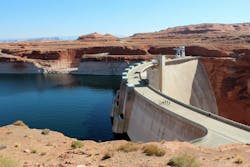
The comments highlight the divide between the basins over responsibility for stabilizing major reservoirs, including Lake Mead and Lake Powell, which remain at historically low levels after decades of drought and over-allocation.
Lower Basin officials argue that water users in Arizona, California and Nevada have already implemented major conservation programs and accepted reductions under recent federal shortage declarations.