What is quicklime and why is it used in water treatment?
Key Highlights
- Quicklime is produced by calcining limestone, releasing CO₂ and leaving calcium oxide, which reacts vigorously with water to form hydrated lime.
- It is primarily used to raise pH, soften hard water, and enhance coagulation, improving clarity and reducing harmful ions in water supplies.
- In wastewater treatment, quicklime neutralizes acidity, stabilizes sludge, and inactivates pathogens, facilitating safer disposal and environmental protection.
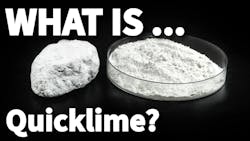
Quicklime, the common name for calcium oxide (CaO), is a highly reactive, alkaline compound that plays a key role in water treatment processes worldwide. Produced by heating limestone (calcium carbonate) at high temperatures in a process called calcination, quicklime has been used for centuries across industries from construction to metallurgy. In the water sector, its chemical properties make it especially valuable for improving water quality, managing pH, softening hard water, and aiding wastewater treatment.
What is quicklime?
Quicklime is a white, caustic solid with the chemical formula CaO, often referred to as burnt lime. It forms when calcium carbonate — commonly found in limestone — is heated to temperatures above about 825 °C, driving off carbon dioxide (CO₂) and leaving calcium oxide behind.
When quicklime is added to water, it reacts vigorously in a process known as slaking, forming calcium hydroxide (Ca(OH)₂), also called hydrated lime. This reaction releases heat and produces a strong base that is highly effective in raising water pH and alkalinity.
Why is quicklime used in water treatment?
Quicklime’s versatility makes it a cornerstone chemical in both drinking water and wastewater treatment. Its primary functions in the water sector include:
pH adjustment and alkalinity control
One of the most fundamental uses of quicklime in water treatment is to raise and stabilize pH. Many natural water sources are slightly acidic, which can contribute to corrosion in distribution systems and reduce the effectiveness of disinfectants such as chlorine. By increasing alkalinity and neutralizing acid, quicklime helps create a stable water chemistry that protects infrastructure and supports downstream treatment processes.
Softening hard water
Water hardness, caused by dissolved calcium and magnesium ions, can lead to scale buildup in pipes, appliances, and boilers. Quicklime reacts with these hardness ions, forming insoluble compounds such as calcium carbonate and magnesium hydroxide. These precipitates can then be removed through settling or filtration, resulting in softer, more usable water. This process — often called lime softening — is a foundational method for reducing carbonate hardness.
Coagulation and impurity removal
Quicklime also improves the effectiveness of other coagulants used during water purification. By adjusting pH into an optimal range, it encourages small, suspended particles like clay, organic matter, and turbidity-causing solids to clump together (coagulate) and form larger aggregates (flocs) that settle out of suspension more easily. This enhances clarity and reduces suspended solids in the finished water.
Beyond turbidity, quicklime chemistry can help precipitate certain dissolved contaminants, including heavy metals such as iron, manganese, and lead, as well as silica, phosphates, and other problematic ions. These precipitates are then removed with solid waste.
Wastewater treatment and sludge management
In wastewater treatment settings, quicklime serves several critical purposes. It raises pH to neutralize acidic waste streams, which protects treatment infrastructure and permits biological processes to function properly. It also aids in sludge conditioning and dewatering — improving the separation of solids from water and making sludge easier to handle, dispose of, or repurpose.
Under high pH conditions achieved with lime, certain pathogens are inactivated, helping disinfect residuals before disposal. In sludge treatment, lime can reduce odors by stabilizing organic waste and suppressing microbial growth.
How quicklime works in water systems
In practice, quicklime is often converted into a slurry or into hydrated lime before use. A slurry — a suspension of calcium hydroxide particles in water — can be metered into treatment systems for controlled pH adjustment and softening.
The overall effect of adding quicklime or its derivatives is to promote chemical reactions that convert dissolved ions into solid precipitates, which can be settled and filtered out. For example, in lime softening:
-
Calcium bicarbonate reacts with lime to form calcium carbonate (solid) and water.
-
Magnesium bicarbonate reacts to form magnesium hydroxide (solid).
These solids are then removed as part of water purification processes.
Benefits and considerations
Quicklime is valued for being cost-effective and widely available. Its use enables utilities to manage water hardness, stabilize pH, reduce corrosivity, and improve overall water quality. Unlike some stronger chemicals, lime is relatively safe to handle in dilute forms, though proper precautions are required due to its caustic nature before hydration.
However, the effectiveness of lime treatment depends on precise dosing and thorough mixing to avoid issues like excessively high pH in finished water, which must then be corrected (often through recarbonation) before distribution.
Quicklime’s role in sustainable water treatment
Quicklime remains a workhorse chemical in traditional water treatment processes as utilities manage drinking water quality, wastewater effluent, and regulatory compliance. Its ability to adjust pH, aid in softening, and precipitate contaminants continues to support modern treatment plants in delivering safe, reliable water to communities and protecting environmental health.
About the Author
 Alex Cossin
Alex Cossin
Associate Editor
Alex Cossin is the associate editor for Waterworld Magazine, Wastewater Digest and Stormwater Solutions, which compose the Endeavor Business Media Water Group. Cossin graduated from Kent State University in 2018 with a Bachelor of Science in Journalism. Cossin can be reached at [email protected].