What is operational technology (OT)?
Key Highlights
- OT controls physical processes in water treatment, including pumps, valves and chemical dosing, essential for operational efficiency and safety.
- Unlike IT, which manages data, OT focuses on safety, reliability and continuous operation, making its protection crucial during cyber incidents.
- Key OT technologies include SCADA, PLCs, RTUs, HMIs, sensors and instrumentation, forming the backbone of industrial control systems.
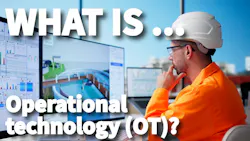
If you've been following recent news about cyberattacks targeting U.S. water systems, you've likely seen the term operational technology (OT) appear repeatedly.
When more than 30 water systems in Minnesota experienced coordinated cyberattacks in late July 2026, utilities reported that their operational technology systems had been targeted. Similar incidents were later reported in additional states, reinforcing concerns about the cybersecurity of critical water infrastructure. Fortunately, most affected utilities continued operating by switching to manual controls, and no drinking water contamination was reported.
But what exactly is OT, and why has it become such an important topic for drinking water and wastewater utilities?
What is operational technology (OT)?
Operational technology (OT) refers to the hardware and software used to monitor, control and automate physical processes. Unlike information technology (IT), which manages data and business operations, OT directly interacts with equipment in the physical world.
In a drinking water treatment plant, OT is responsible for tasks such as:
- Starting and stopping pumps
- Opening and closing valves
- Monitoring tank levels
- Measuring chlorine residuals and pH
- Controlling filtration and chemical feed systems
- Managing distribution system pressure
- Monitoring reservoirs and lift stations
Without OT, many of these processes would have to be performed manually, significantly increasing labor requirements while reducing operational efficiency and system reliability.
OT vs. IT: What's the difference?
Although OT and IT increasingly share networks and data, they serve very different purposes.
Information technology (IT) supports business functions, including email, billing, payroll, customer service, accounting and office networks.
Operational technology (OT) controls physical infrastructure and equipment that delivers drinking water and treats wastewater.
The distinction matters because cybersecurity priorities differ.
For IT systems, protecting the confidentiality of data is often the highest priority. For OT systems, the primary concerns are safety, reliability and continuous operation. If an office computer goes offline, employees may lose access to email. If an OT system fails, pumps could stop running, storage tanks could overflow or treatment processes could be interrupted.
What technologies make up an OT system?
Operational technology is an umbrella term encompassing multiple industrial control technologies.
The most common include:
- SCADA (Supervisory Control and Data Acquisition):The software platform operators use to monitor and control water treatment plants and distribution systems from a central control room.
- PLCs (Programmable Logic Controllers): Industrial computers that execute automated control logic, such as turning pumps on or off or maintaining chemical dosing.
- RTUs (Remote Terminal Units): Devices that collect information from remote facilities like water towers, pump stations and reservoirs.
- HMIs (Human-Machine Interfaces): Computer screens and dashboards that allow operators to view system status and issue commands.
- Sensors and instrumentation: Equipment that measures flow, pressure, turbidity, chlorine residual, pH, temperature and other operational parameters.
Together, these components form an industrial control system (ICS), which is one of the primary types of OT environments used throughout the water sector.
Why has OT become a cybersecurity concern?
Historically, most water utility OT systems were isolated from the internet.
Today, many utilities rely on remote monitoring, cloud-based analytics, mobile access and connected sensors to improve efficiency. While these technologies provide significant operational benefits, they also expand the potential attack surface for cybercriminals and nation-state actors.
Recent cyber incidents have demonstrated this evolving risk. Federal agencies say attackers have increasingly targeted internet-connected operational technology, including programmable logic controllers (PLCs), to disrupt water and wastewater operations. In response, the Cybersecurity and Infrastructure Security Agency (CISA) has urged utilities to disconnect unnecessary internet-exposed OT devices and strengthen access controls.
The goal of many attacks is not to steal customer information but to disrupt the physical processes that OT controls.
How are water utilities protecting OT?
Cybersecurity has become a core part of utility resilience, alongside physical security and emergency preparedness.
Many utilities are strengthening OT security by:
- Separating OT networks from business IT networks.
- Limiting remote access to operational equipment.
- Using multi-factor authentication for remote users.
- Continuously monitoring industrial control systems for suspicious activity.
- Maintaining backups of control system configurations.
- Regularly updating firmware and software where practical.
- Training operators to recognize cybersecurity threats.
- Developing emergency procedures that allow facilities to continue operating manually if automation is compromised.
Manual operation remains an important safeguard. During the recent attacks, several utilities successfully maintained safe drinking water service by temporarily operating pumps and treatment processes without automated controls.
Why OT matters more than ever
As utilities adopt digital technologies, artificial intelligence, predictive maintenance and advanced analytics, the line between IT and OT continues to blur. That convergence offers opportunities to improve efficiency, optimize treatment and reduce costs—but it also requires stronger cybersecurity practices.
Operational technology has quietly powered drinking water and wastewater systems for decades. Today, it is no longer just an engineering topic; it is a critical component of utility resilience, public health and infrastructure security.
Understanding OT—and how it differs from traditional IT—helps utilities better evaluate cybersecurity risks while ensuring that the systems responsible for delivering safe, reliable drinking water continue operating when communities need them most.
About the Author
 Alex Cossin
Alex Cossin
Associate Editor
Alex Cossin is the associate editor for Waterworld Magazine, Wastewater Digest and Stormwater Solutions, which compose the Endeavor Business Media Water Group. Cossin graduated from Kent State University in 2018 with a Bachelor of Science in Journalism. Cossin can be reached at [email protected].