What advice would you give to women entering the water industry today, especially those early in their careers?
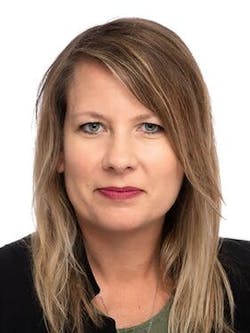
"Find your voice. And find it early. Don’t hesitate to ask questions. If something isn’t clear to you, chances are others are wondering the same thing. And even if they aren’t, it’s far better to ask than to struggle in silence.
Remember: you’ve earned your place here. Carry that confidence with you. Stay curious. Absorb everything you can. And when it’s your turn to share what you’ve learned, do it with clarity, care, and genuine enthusiasm. You belong here. Now let your voice show it.
People want to hear from you. And the sooner you trust the value you bring, the sooner others will, too. Then, watch how you grow."
— Amy Smitley, Vice President, Arcadis
"I would encourage women entering the water industry to learn and experience as much as possible, especially early in their careers. Take every training you can, say yes to field assignments, and don’t be afraid to step outside your comfort zone.
Volunteer in your community, get involved in professional organizations, and always jump at opportunities to expand your network. Those experiences build both technical confidence and lasting professional relationships."
Laura Carpenter, Hydrologist, Senior Manager, Brown and Caldwell
"The advice I would give is to utilize your network, never stop learning, obtain a mentor who is seasoned, and be an active member in an association like WEF or AWWA."
Nadine Robertson, Project Leader, Veolia
"As someone who is early in their career, my advice would be to “be a sponge.” Rome wasn’t built in a day, so if this career is completely new to you, take the time to learn and ask questions. Sometimes, parts of the work we do can only be truly understood by doing it, and that is okay. Show yourself grace as you learn and your confidence will soar!"
Rachel Smith, Water Distribution Operator Trainee, FCG DWSU
"Be authentic, find your voice to speak your truth and know that you have the power to create disruptive and revolutionary pathways to up-level technology, outreach, and life-force quality through water streams."
Suzanne Forcese, Journalist, The WaterToday Media Group
"You earned a seat at the table. There is room for everyone around the table. Don't sit off to the side. Also, at its core, the water industry exists to serve the public. That service mindset aligns closely with how I approach projects. I meet people where they are, educate and get educated from them, and help all feel secure rather than overwhelmed."
Irene Schild Caminer, Attorney, Caminer Law, LLC. Previously was the general counsel to the Chicago Department of Water Management from 1997-2017
"Knowledge is power. The more you know about legislature in other jurisdictions would make your life a lot easier because you have many points of reference for continuous improvements or for simple budgeting."
Anonymous, Quality Audit Coordinator
"You can have the most certifications and work the hardest, but if it's a boys club mentality, your achievements will always be ignored or downplayed. Not all jobs are like this, but many are. Don't stay in toxic environments. Find a place where you will be truly valued for your contributions."
Katy Langston, Wastewater / Water Operator, City of Palmer, Alaska
"Congratulations! You have chosen wisely. It is an exciting time to be a part of this growing and changing industry. The water world is quickly adopting technology and investing in efficient and resilient infrastructure to protect this critical resource. Opportunity is all around you."
Kristy Lavelle, Expert Management Consultant, Associate Vice President, Arcadis
"For women early in their careers, learn, listen, observe, be strong and take advantage of every table you can sit at, and I mean sit at the table. Ask the questions and then listen to the answers. Also, take advantage of training opportunities, continuing education and joining industry related associations."
Anonymous, Executive Director
"Do not let anyone discourage you. Use negative experiences as motivation to push forward. Do not compare yourself to others. Everyone has a different background, path, and set of goals. Go after what you want, advocate for yourself, and stay true to who you are."
Paula Hart, P.E., Principal/Owner, Hart Engineering, LLC
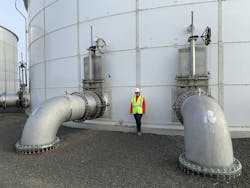
"I would say that showing up, working hard, and 'doing what you said you were going to do' all go far in this industry.
Get to know the operators you are working with, as they are one of your primary resources. Don't just 'show up' when there's something wrong; be onsite frequently.
Build that trust and create positive working relationships. The work is so much easier when you have those lines of trust built and people resources to lean on."
— Molly Dimick, Sr. Environmental Engineering Manager
“'Don’t let the fact that this field is primarily men scare you away. Some men will try to make it difficult or may have an attitude about working with a female. Don’t let that stop you.' I believe deeply in the value women bring to the industry and encourage newcomers to stand confidently in their abilities."
Tessa Chilson, Director of Environmental & Fleet Services, Alliance for Empowerment
"My advice would be to get your EIT and PE as soon as possible. It gets harder to study for and pass these exams later on as family obligations increase and time has passed since you learned the material in college."
Divya Agrawalla, Principal Civil Engineer
"While the water industry has come a long way in accepting women over the past 30 years, there will still be times when, as a woman (especially a young one), that you may not be taken as seriously as others in the room. Do not be afraid to stand up for yourself and speak up."
Kirsten King, Chief Executive Officer, New England Water Works Association, Inc.
"Challenge yourself to do the dirty work. Spend time in the field and learn how systems operate. If you want to manage, design, or regulate water systems, you should understand how your choices affect the operators responsible for keeping them running."
Vanessa Kichline, Capital Project Facilitator, Dutchess County Water and Wastewater Authority
"First, this is a lifelong career industry. It allows women who are willing to dedicate themselves to a workplace the opportunity to become highly valuable to the company. Knowledge and historic data is a powerful tool especially in water world, and of course we know women are a vault of information."
Cynthia Ellis, General Manager, Madison Suburban Utility District
"Women entering the water industry should remember that, even in advanced countries, gender bias can still surface — and they must stand firm. Own their achievements, show their capabilities with pride, and never allow anyone to diminish or take credit for their success."
Anonymous, Business Relationship Manager - Group Country Manager
"Keep your wits about you. Do what you feel is right. You may not always be heard in a room, but what you do speaks louder than your words. So, speak up, but also do what you say. Go with your gut and don't always take no for an answer."
Lettice Brown, MS4 Coordinator, City of York
"The water and wastewater industry/careers are worth the effort. It will be hard and difficult at times but keep working. Sometimes you will feel like you don't belong and you are not enough but trust me the industry needs you and the career will be fulfilling and rewarding!"
Michelle Perkins, Wastewater Superintendent/Water & Distribution Operator, Tuolumne Utilities District
"Know that you can do it, but understand it is hard work. The hours are long, they are cold, they are hot. Be prepared for all of this because that’s not even the job that is just the environment."
Kelly Devlin, Operations - Chemical Treatment Supervisor
"We as women, are perfect for this industry. Most of us are multi taskers and nurturers naturally. If you are a mom you already do this daily. Prioritizing your task, compartmentalizing emotion to focus on tasks and completing them in a timely fashion. We also have the ability to empathize with our customers and coworker. We are stronger then we know."
Pamela Jarecki, General Manager, Lake of The Woods Mutual Water Company
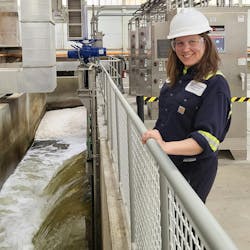
"The water industry presents tremendous opportunity for women, especially given how underrepresented we still are in leadership, operations, and technical roles.
Build technical competence early, ask questions without hesitation, and seek mentors who respect both your intelligence and your ambition."
— Brenda Staudenmaier, Water & Wastewater Training Specialist, WI Rural Water Association
"If I could give one piece of advice to women entering the water industry today, especially early in their careers, it would be this: Own your seat at the table — and then learn everything you can. Water and wastewater is still a field where you may be the only woman in the room, the only woman in the plant, or the youngest voice in a meeting full of seasoned operators. That’s okay. Competence speaks loudly here. Learn the process. Learn the why behind the pumps, clarifiers, SCADA systems, microbiology, and regulations. Get certified. Ask questions. Volunteer for the tough assignments. Technical confidence changes how you walk into a room."
Angela G Walker, Assistant Director of Wastewater Operations, Brunswick-Glynn Joint Water & Sewer Commission
"That building a support network is more important than you think for your long term success."
Natalie Sierra, National Practice Leader, Solids and Energy, Brown and Caldwell
"Find your voice. And find it early. Don’t hesitate to ask questions. If something isn’t clear to you, chances are others are wondering the same thing. And even if they aren’t, it’s far better to ask than to struggle in silence. Remember: you’ve earned your place here. Carry that confidence with you. Stay curious. Absorb everything you can.
And when it’s your turn to share what you’ve learned, do it with clarity, care, and genuine enthusiasm. You belong here. Now let your voice show it. People want to hear from you. And the sooner you trust the value you bring, the sooner others will, too. Then, watch how you grow."
Amy Smitley, Vice President, Arcadis
"You can do anything, you can be anything, make friends, live what you do and most importantly laugh and have fun!"
Tanya McCoy-Caretti, North America Business Area Sales Director, Resilience Water, Arcadis
"Find the people who are two or three steps ahead of where you want to be and build real relationships with them. That kind of network will stretch you and help you see what is possible. Also, give yourself room to move around in the water space as you figure things out. It is a big field, especially when you are just starting out.
Take your time, explore, and do not be afraid to try a few different paths before you decide what you really want to drill down on (pun intended). The right fit is usually something you discover by staying curious and open."
Erin Huber-Rosen, Executive Director and Founder, Drink Local Drink Tap
"Try everything. Design in water treatment, conveyance, wastewater. Ask for design. Ask for construction. Demand mentors. Learn to self advocate, a daunting task."
Susan Spore, Managing Engineer (off the cuff I say “cat herder”), Brown and Caldwell
"I didn't know how to feel comfortable taking up space for a while in my career. A few years back, I reflected on why that was and realized I was concerned/nervous about being perceived as unkind or rude. So to help alleviate those concerns, I developed a set of criteria I try to bring into my interactions with colleagues: I want to be kind, I want to be fair, and I want to be respectful. As long as I bring those values into my work, then I can be satisfied I brought my best."
Samantha Kepley, Principal of Project Management, Brown and Caldwell
"Be willing to put yourself out there and try new things. The worst-case scenario is you learn a valuable lesson of what you don't like."
Megan Konecki, Water Design Engineer, Baxter & Woodman
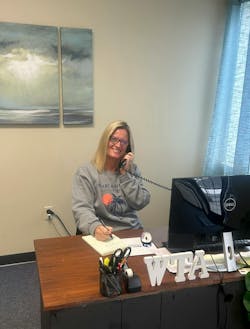
"Never stop learning, empower yourself at all times."
— Laura Witmer, Co-owner, Water Treatment & Accessories, LLC
"I would encourage pursuing hands‑on training or obtaining operator certifications. Even if your career progresses into administrative or managerial roles, the perspective gained from field experience is incredibly valuable. My first job in the industry was as a truck driver delivering water and sewer pipe to construction sites.
From there, I moved into operator and administrative roles, and eventually into management. Each step along the way taught me lessons that I still carry with me today, and I continue to draw on those experiences even in my role as a Business Unit Leader."
Amy Finch, Business Unit Leader (General Manager), WhiteWater, Inc.
"Get as much hands on experience as possible early in your career, and don't waste opportunities for internships during college even if the pay is poor."
C Neisess, Associate Engineer, Stormwater Division, State DOT
"Remain relentlessly curious and never apologize for asking why. The water industry is built on systems that have existed for decades, and we need fresh eyes to challenge the status quo to reach truly sustainable solutions. Beyond that, do not feel like you have to hide your personal journey.
Whether you are a mother, a career-changer, or a late bloomer, those life experiences provide a layer of empathy and resilience that makes you a better leader. The industry needs your technical skill, but it thrives on your unique perspective."
Melody Bailey, Director of Water Resources, Mojave Water Agency
"Frontload your industry / educational credentials. There are still a lot of pathways contingent on a first rung job with a lifting requirement > 50 lbs."
Anonymous, Laboratory Director
"Put your thoughts and ideas down on paper. Progress can start with a rough draft; it doesn’t have to be perfect. If ideas come up in meetings, write them down and offer to take the first pass or draft.
A coworker gave me this advice years ago, and I think it made a big impact in my growth and continued learning and development. Taking initiative by documenting ideas helps move conversations into action and builds trust. It can also demonstrate your willingness to lead."
Caroline Dunkel, Senior Data Analyst, SediVision
"It’s never too late to learn and to always be open to change. The industry has moved very quickly over the past 10 years, that’s for sure."
Wendi Kramerpugh, Owner & Vice President, Pure Valley Water
"I would say that showing up, working hard, and 'doing what you said you were going to do' all go far in this industry. Get to know the operators you are working with, as they are one of your primary resources.
Don't just "show up" when there's something wrong; be onsite frequently. Build that trust and create positive working relationships. The work is so much easier when you have those lines of trust built and people resources to lean on."
Molly Dimick, Sr. Environmental Engineering Manager
"Do good work but explore and network. Our career paths never seem to be a straight line. Look for mentors and sponsors. Be always learning and curious."
Doreen Bartoldus, Senior Client Director, Brown and Caldwell
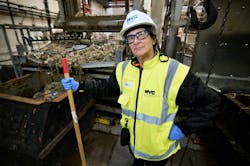
"Create a meaningful (and short) list of values guide your career. I have two: my work has to have meaning, and I have to be effective in it.
This means I am driven by purpose, and I stive to be in a position in which I have the resources, support, environment, culture, etc. to ensure personal and professional success."
— Pam Elardo, VP Strategic Services, Brown and Caldwell
"My advice to women entering the water industry — especially early in your career — is to be persistent and stay curious. Learn the new technologies, but don’t stop at the screen: spend time in the plant, follow senior operators, mechanics, electricians, and technicians, and watch how they think through problems. That institutional knowledge is gold - and it’s how you learn what 'good water' looks like in real time.
And never hesitate to ask questions. Ask why the chemical feed changes, why the pumps sound different, why a process behaves one way in summer and another in winter. The more you ask, the faster you build confidence and judgment. For me, communication has always been key — talking to the crew, learning the problems from them, and thinking through solutions together. Show up, keep learning, and don’t be afraid to get your hands involved. This work is demanding - but it’s a beautiful job with beautiful people."
Luiza Yordanova, Water Plants Manager, City of Yuma Utilities Department
"Be confident in your knowledge and experience."
Pat Lindsay-Harvey, Commissioner and Board Chair, Willingboro Municipal Utilities Authority
"I would offer four things. First, be humble. There is a real difference between what you learn in school and what the actual workplace demands, and acknowledging that gap is a strength, not a weakness.
Second, be respectful: toward your coworkers and toward your supervisors. A good attitude goes an incredibly long way and can more than compensate for gaps in knowledge.
Third, commit to continuous learning. Never let yourself reach a place where you think you know everything; always be willing to learn something new and to change how you do things if a better method exists.
And fourth, be diligent from start to finish. Follow through on your work completely. Strong work ethic is what separates the people who grow in this industry from those who don't. And one more thing I always tell my own daughter: just show up. Showing up consistently and with a good attitude matters more than people realize."
Emilia Blake, Water Quality Lab Analyst, Skagit Public Utility District
"Never stop learning, empower yourself at all times."
Laura Witmer, Co-owner, Water Treatment & Accessories, LLC
"Get comfortable asking questions early, often and without apology. The water industry is complex. From advanced treatment systems and extreme wet-weather capacity planning to construction sequencing, contracts and quality requirements, the learning curve is real. No one walks in knowing everything.
The professionals who grow the fastest are the ones who lean into learning instead of pretending they already understand. I would also encourage women to take ownership of opportunities that feel intimidating. Capability is built through exposure. Confidence follows experience — not the other way around.
And just as importantly, seek mentorship and become one when you can. I have supported more than a dozen professionals throughout my career and currently mentor a woman within Nox Group. Investing in others strengthens both individual careers and the industry as a whole."
Pamela Alvarado, Project Manager, Nox Group
"Ask questions but know who to ask and when to ask."
Susana Blauser Gonzalez, Client Service Manager, Houston Area Lead, Brown and Caldwell
"The water industry presents tremendous opportunity for women, especially given how underrepresented we still are in leadership, operations, and technical roles. Build technical competence early, ask questions without hesitation, and seek mentors who respect both your intelligence and your ambition."
Brenda Staudenmaier, Water & Wastewater Training Specialist, WI Rural Water Association
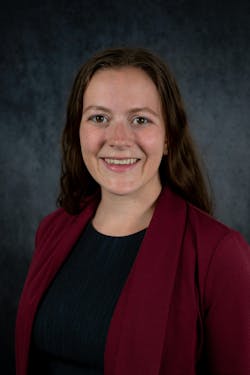
“Be willing to put yourself out there and try new things. The worst‑case scenario is you learn a valuable lesson about what you don’t like.”
— Megan Konecki, Water Design Engineer, Baxter & Woodman
"Take ownership of your career. Starting out, it is good to try different kinds of work, whether drinking water vs. wastewater, design vs. project management vs. business development. Recognize that this process takes effort and may require unpaid overtime as you learn. As you start finding out what you do well and what you enjoy doing, use that knowledge to set career goals and identify your next steps.
Be sure to communicate those goals to your supervisor and others in leadership at your company so they can help align them with the company’s goals and give you the right opportunities. If you find your goals are not aligned or that your company doesn’t support you, don’t be afraid to make a change!"
Ashley Pifer, Director, Water/Wastewater, Halff
"Study as much as you can. Take any course that is offered."
Rebecca Sagers, Former Treatment Control Analyst, Administrative Assistant, City of Three Rivers WWTP
"My advice to women entering the water industry is to build both technical confidence and professional courage. Develop strong analytical and problem-solving skills, but do not underestimate the importance of asking questions, speaking up, and seeking visibility for your work.
The water sector is increasingly data-driven and interdisciplinary. Gaining skills in areas like data analysis, digital tools, and emerging technologies can open powerful opportunities. At the same time, do not wait until you feel “fully ready” to contribute — growth often happens outside of comfort zones. Finally, seek mentors and supportive person.
The right network can accelerate learning and open doors, especially in technical fields where representation is still growing."
Monireh Khayat, AI & Water Quality Researcher (PhD Candidate), Azad University, South Tehran branch, Industrial faculty
"Be patient with customers they may take a bit longer to warm up to you."
Anonymous, Inside Salesperson
"Find a good mentor — one for you professionally, one for you personally, or one that can do both. Professionally, find someone who can push you to grow and who has your back when you need it. Personally, find someone who you can open up to and lean on when you're facing life's struggles. Women try to juggle SO MUCH, between work, kids, community, church. Having someone who can champion you through that is invaluable!"
Laura Leenderts, Project Manager, Outside Sales, DSG Supply
"Get curious! There are so many opportunities to advance innovation and solve complex problems by being inquisitive and bringing forward bold ideas. Ask questions and voice bold ideas!"
Meghan B Krishnayya, Interim Chief Technical Officer, Brown and Caldwell
"My advice to women entering the water industry is to embrace every step of your journey. Every experience whether it feels like a win or a challenge is shaping you into a stronger, more confident professional. This field is essential to every community, and it is a true privilege to serve others by protecting and managing such a vital natural resource."
Claudia Sandoval, General Manager, Chambers-Liberty Counties Navigation District
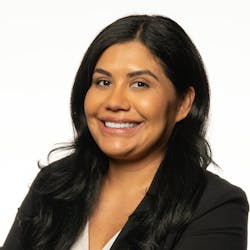
"Get comfortable asking questions early, often and without apology. The water industry is complex.
From advanced treatment systems and extreme wet-weather capacity planning to construction sequencing, contracts and quality requirements, the learning curve is real. No one walks in knowing everything. The professionals who grow the fastest are the ones who lean into learning instead of pretending they already understand.
I would also encourage women to take ownership of opportunities that feel intimidating. Capability is built through exposure. Confidence follows experience — not the other way around.
And just as importantly, seek mentorship and become one when you can. I have supported more than a dozen professionals throughout my career and currently mentor a woman within Nox Group. Investing in others strengthens both individual careers and the industry as a whole."
— Pamela Alvarado, Project Manager, Nox Group