What change, big or small, would you most like to see to better support women working in water?
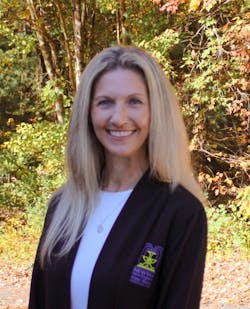
“More education about the drinking water profession in general, starting at the elementary school level all the way through college, and showcasing what a robust career it offers.
Workforce development is desperately needed in our industry.
We are working on an initiative here in the northeast but if we do not start pulling more 'non-traditional' employees into this workforce we will hit a crisis point in the near future.”
— Kirsten King, Chief Executive Officer, New England Water Works Association, Inc.
"I would like to see a normalization of professional flexibility. Life happens outside the 9 to 5, and we need structures that support women through every stage of their personal and professional journey.
By prioritizing a culture of mutual support for life events, and where women support women and men act as active allies, we create an environment where talent can thrive. This shift is essential to ensuring that talented women don’t just enter the water sector but stay to lead it."
Melody Bailey, Director of Water Resources, Mojave Water Agency
"The biggest change I want to see is women in water being developed, trusted, and promoted as technical leaders — without having to shrink who they are."
Angela G Walker, Assistant Director of Wastewater Operations, Brunswick-Glynn Joint Water & Sewer Commission
"I honestly think the most important change I would like to see in the industry to support working women is greater flexibility in the workplace. Many women leave the industry when they start families because traditional work schedules can be difficult to balance.
Offering options such as part-time schedules or remote work can benefit everyone. A standard 40 to 50 hour workweek does not work for every employee, and flexibility helps retain talented professionals."
Paula Hart, P.E., Principal/Owner, Hart Engineering, LLC
"The small things. A network, a safe space to vent, forgiveness/acceptance that it’s ok to have a bad day- especially if you are juggling both kids and a career."
Susan Spore, Managing Engineer (off the cuff I say “cat herder”), Brown and Caldwell
"I believe that flexible work arrangements have helped women stay in meaningful careers that they may not have otherwise been able to balance. I do think there would be value in more companies allowing part-time work for those who are in a near-term situation of caregiving (e.g. for a child, elderly parent, partner, etc.) so that they do not have to exit the field to attend to the demands of their personal life."
Natalie Sierra, National Practice Leader, Solids and Energy, Brown and Caldwell
"A reduction in ageism; going from too young to be taken seriously (can happen as late as 40) to too old to be considered relevant (can happen as early as 50)."
Anonymous, Laboratory Director
"More education about the drinking water profession in general starting at the elementary school level all the way through college, and showcasing what a robust career it offers. Workforce development is desperately needed in our industry. We are working on an initiative here in the northeast but if we do not start pulling more "non-traditional" employees into this workforce we will hit a crisis point in the near future."
Kirsten King, Chief Executive Officer, New England Water Works Association, Inc.
“I would like to see women train other women. Representation matters, and seeing women lifting up the next generation through knowledge-sharing, teaching, and support is something I believe would strengthen the field as a whole."
Tessa Chilson, Director of Environmental & Fleet Services, Alliance for Empowerment
"I would like to see more women in higher leadership positions such as Project Managers, Regional Directors, VPs, Presidents etc. We are far more than administrative roles. We are technical, analytical, and innovative. We just need an opportunity to be seen and heard! I am doing my part by speaking on panels, mentoring, and being a difference maker in advocating for mor women in our industry."
Nadine Robertson, Project Leader, Veolia
"I think the biggest and most difficult change I'd like to see is cultural. Attitudes need to shift around the balance between work and home life to give everyone an equal footing at the workplace and at home."
Megan Konecki, Water Design Engineer, Baxter & Woodman
"I would like that when a woman speaks up, the men listen. Oftentimes when i am in a room full of men, my voice gets drowned out and dismissed. My ideas are overlooked and unheard. But when I make my ideas known and speak up just a little louder, they listen and things work out. If we stop blabbing and listen, it’s better for everyone."
Lettice Brown, MS4 Coordinator, City of York
"I would like to see more water industry education and exposure to girls and women in the school system. Women need to know that the water trade is a good, viable options for those not able or wanting to attend college."
Michelle Perkins, Wastewater Superintendent/Water & Distribution Operator, Tuolumne Utilities District
"I would like to see intentionality around mentorship and succession plan that includes women. By that I mean, women mentors, and women being identified as successors in leadership positions. It's hard for me to see meaningful change on the horizon for today, but in the next 2-5 years, I think there could be a lot of meaningful change if we are intentional about it."
Samantha Kepley, Principal of Project Management, Brown and Caldwell

"I love women’s networking events and would love to see them continue to grow through corporate support and women in the water industry committing to participate.
More accessible women’s networking events that foster mentorship, visibility, and community are crucial to women staying in the industry. No one is going to do the work for us; we as women in the industry have to put in the work.
It’s hard to become what you haven’t seen, and these spaces make leadership feel possible."
— Caroline Dunkel, Senior Data Analyst, SediVision
"One change I would most like to see is more women visible, valued, and promoted into leadership roles across water operations, engineering, and utility management. When I came to the U.S., I was surprised by how often women were still under-represented — and sometimes underestimated — especially in plant and infrastructure leadership. This industry runs on competence, accountability, and teamwork.
The best way to support women is to make sure opportunity matches ability: clearer pathways from operator to supervisor, more women leading major projects and capital programs, and intentional sponsorship — not just encouragement — so women are in the rooms where decisions are made. It’s a small shift with a big impact: normalize women as the technical experts and leaders we already are, and the industry becomes stronger for it."
Luiza Yordanova, Water Plants Manager, City of Yuma Utilities Department
"Stricter rules against harassment."
Rebecca Sagers, Former Treatment Control Analyst, Administrative Assistant, City of Three Rivers WWTP
"Sexism needs to end, and it doesn't end by just hiring a woman. Men need to understand that some of us have been actively blocked from 'men's work' for decades, so if our fixer skills are lacking, there is a reason for it.
My coworker was forced up a telephone pole at age 11. I was forced out of the garage and told, 'There's no point in getting your mechanic's certificate. No one will hire you because you're a woman.' If a woman is hired, and she wants to learn, men need to step up and train them instead of treating them like they are incompetent for asking for a manual or to share some knowledge."
Katy Langston, Wastewater / Water Operator, City of Palmer, Alaska
"Training on the technology changes that might be coming for the future!"
Wendi Kramerpugh, Owner & Vice President, Pure Valley Water
"Education and mentorship. I came into this industry somewhat by accident and stayed because I loved it, but not everyone has that path available to them. I would love to see more intentional efforts to help women already working in the field understand the full range of opportunities that exist, whether in a lab, in operations, in treatment, or in distribution.
Organizations like Pacific Northwest AWWA already do meaningful mentorship work, and I think expanding that kind of support, connecting experienced professionals with newer ones, would make a real difference. Within utilities, even small things like a thoughtful onboarding process that exposes new employees to every department can open doors that people didn't know were there."
Emilia Blake, Water Quality Lab Analyst, Skagit Public Utility District
"Equal pay I'm sure men still make more money than women in this industry."
Anonymous, Inside Salesperson
"One meaningful change I would like to see is more structured pathways for mentorship and technical leadership development for women in the water sector. While many talented women enter the field, fewer are consistently supported in advancing into decision-making and innovation-focused roles.
Creating formal mentorship programs, research collaborations, and leadership training opportunities can help bridge that gap. In technical areas such as data science and AI applications in water quality, representation matters — not only for equity, but for strengthening the diversity of ideas that shape environmental solutions.
Even small changes, such as encouraging visibility of women’s technical contributions and fostering inclusive research teams, can significantly improve confidence, retention, and long-term impact in the industry."
Monireh Khayat, AI & Water Quality Researcher (PhD Candidate), Azad University, South Tehran branch, Industrial faculty
"The biggest support in my view is to recognize and applaud a woman for her accomplishments."
Suzanne Forcese, Journalist, The WaterToday Media Group
"I would like to see far greater awareness of the water industry as a viable and rewarding career path for women. Many young women have no idea the opportunities exist. Even at the university level, professors often do not understand the scope of careers available in drinking water, wastewater, compliance, operations, and infrastructure.
Strengthening partnerships between utilities, industry professionals, and universities would make a significant difference. Internships, guest lectures, and clear career pathways could help women see this industry as accessible, stable, and impactful before they ever graduate."
Brenda Staudenmaier, Water & Wastewater Training Specialist, WI Rural Water Association
"Having men take women seriously as professional peers rather than just a woman in the industry."
Pat Lindsay-Harvey, Commissioner and Board Chair, Willingboro Municipal Utilities Authority
"I love women’s networking events and would love to see them continue to grow through corporate support and women in the water industry committing to participate. More accessible women’s networking events that foster mentorship, visibility, and community are crucial to women staying in the industry.
No one is going to do the work for us; we as women in the industry have to put in the work. It’s hard to become what you haven’t seen, and these spaces make leadership feel possible."
Caroline Dunkel, Senior Data Analyst, SediVision
"Women, let’s take it upon ourselves. Go after your desires, take the reigns where appropriate, and support other women along the way."
Kristy Lavelle, Expert Management Consultant, Associate Vice President, Arcadis
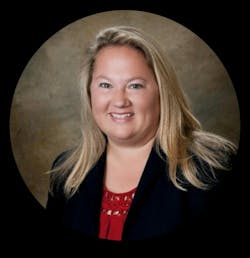
"I honestly think the most important change I would like to see in the industry to support working women is greater flexibility in the workplace. Many women leave the industry when they start families because traditional work schedules can be difficult to balance.
Offering options such as part-time schedules or remote work can benefit everyone. A standard 40 to 50 hour workweek does not work for every employee, and flexibility helps retain talented professionals."
— Paula Hart, P.E., Principal/Owner, Hart Engineering, LLC
"Even here in Germany, I still see gender influencing who becomes a leader more than actual capability. I want to see a real shift toward promoting talented young women into leadership roles — not as an exception, but as a norm."
Anonymous, Business Relationship Manager - Group Country Manager
"Less expectation that physical strength equals competence and more attention to practical needs in the field. I have seen new facilities designed and built without restrooms, even when operators are expected to be onsite for hours at a time, or without adequate lift assistance for routine tasks. Those decisions send a message about who the work is designed for."
Vanessa Kichline, Capital Project Facilitator, Dutchess County Water and Wastewater Authority
"I would love to see a stronger, more intentional community for women working in water. Having a space where women across nearby districts can connect, share experiences, exchange knowledge, and learn from one another would be incredibly powerful. Collaboration makes all the difference."
Claudia Sandoval, General Manager, Chambers-Liberty Counties Navigation District
"Really it is our women's mind set. We are just as good as the men, we just need to have faith in ourselves. Also, letting us speak if we have an issue and not have someone else step in saying they are offended for us. If we are upset about a situation we can bring it forward."
Pamela Jarecki, General Manager, Lake of The Woods Mutual Water Company
"I believe women are uniquely qualified due to their nurturing nature for a career in the essential service of water world. We need to support them in times of family illness and childcare so that they are able to be human and be employed successfully."
Susana Blauser Gonzalez, Client Service Manager, Houston Area Lead, Brown and Caldwell
"I want to see women supporting other women, especially mothers who understand the unique challenges of balancing a career with raising young children. I would love to see women stepping in as backup for one another when circumstances beyond our control arise. Having that kind of understanding and support makes a meaningful difference."
Cynthia Ellis, General Manager, Madison Suburban Utility District
"In general, making the water industry sound more appealing for women would have a long-lasting impact. How is that accomplished? Alternative methods for career entry — maybe part time positions, enhanced training, cross functional training, meaning the administrative side coupled with in the field and hands on experience."
Anonymous, Executive Director
"More hands-on training, should be available or required to succeed as water operators, ... from sampling water to technical trainings in operating water systems. These trainings should be allowed by, offered, and available to employers; especially to women engineers and operators, not just to maintenance staff, which is heavily male dominated."
C Neisess, Associate Engineer, Stormwater Division, State DOT
"The Water industry is showing up with more women but from my vantage point I do not see them advancing or their innovative stories being told. We are also a diverse industry of women in administration, operations, design and construction. Inclusivity and sponsorship is needed at all levels."
Doreen Bartoldus, Senior Client Director, Brown and Caldwell
"Water is a 24/7/365 industry. We need flexibility in the work force. At different stages in life, whether caring for young children or aging parents, there needs to be the ability to meet the meet the needs of the workforce without jeopardizing the treatment, distribution, and transmission of water."
Irene Schild Caminer, Attorney, Caminer Law, LLC. Previously was the general counsel to the Chicago Department of Water Management from 1997-2017