Valve and gavel: Perchlorate removal at California’s drinking water facilities
Key Highlights
- Perchlorate is toxic – it disrupts the production of thyroid hormones and the development of the baby’s brain during pregnancy inflicting neurodevelopment challenges in children.
- In January 2026, the EPA proposed an MCL of 20 ppb for perchlorate in drinking water.
- California’s MCL for perchlorate is 6 ppb.
- Ion exchange using resins is a common technology to remove perchlorate from contaminated wells at drinking water facilities in California.
- Litigation is also an approach, but only in some cases, for the cleanup of perchlorate contamination at drinking water facilities.
- Bioremediation has also been used to remove perchlorate from groundwater wells.
- Engineered material made of carbon, palladium, and molybdenum has demonstrated its ability to remove perchlorate from wastewater.

The 250 employees at Santa Clarita Valley (SCV) Water Agency in California serve drinking water to roughly 75,000 customers. Groundwater found between 200 and 2000 feet beneath the Santa Clarita Valley and held between the stones, sand and silt is pumped through manmade drilled holes called groundwater wells.
Pumping groundwater is akin to sucking water through a straw in a glass, the difference being that the groundwater in the wells at SCV Water Agency is tainted with a toxic chemical, perchlorate.
From the explosives in the sky, perchlorate silently drops on the ground due to gravity and rain, mixing in the water and then seeping into the porous ground making its way into the groundwater. Joining the groundwater is perchlorate from nitrogen fertilizers and other sources. The Environment Protection Agency’s (EPA) 2024 report mentioned that when ingested from drinking water, perchlorate disrupts the production of thyroid hormones – the hormone that regulates the body’s metabolism – and notably, also disrupts the development of the baby’s brain during pregnancy inflicting neurodevelopment challenges in children.
Due to its serious health effects, the EPA signed a proposed enforceable maximum contaminant level (MCL) of 20 parts per billion (ppb) for perchlorate in drinking water in January 2026. When enforced (and these proposed regulations are eventually enforced), drinking water suppliers must comply with this number. The 2025 EPA’s definition of an MCL is the highest allowable level of a contaminant in drinking water, meaning only a maximum of 20 ppb of perchlorate will be allowed in drinking water.
However, this federal number is inadequate for states that have their own lower perchlorate MCLs such as California’s perchlorate MCL of 6 ppb. If one ppb is the equivalent of one drop of water in a 10,000-gallon municipal size swimming pool according to Regional Air Quality Council, then 20 ppb perchlorate is 20 drops of perchlorate in 10,000-gallons water, a miniscule amount and 6 ppb is infinitesimal.
At SCV Water Agency, the groundwater is tainted with 18 ppb perchlorate, or 18 drops of perchlorate in a 10,000-gallon municipal swimming pool. The perchlorate is removed using a technology called ion exchange.
Ion exchange removes unwanted chemicals from water by swapping them with other chemicals using beads called resins. At SCV Water Agency, the perchlorate-tainted water travels through huge columns packed with white to yellow translucent spherical beads called PSR2+ resins of 700 microns, roughly the size of a coarse beach sand, and containing the chemical chloride. Strongly attracted to the resin, the perchlorate stays in the column and is swapped with the chloride, resulting in SCV Water Agency’s drinking water with less than one ppb of perchlorate.
“We can get strict with limit, but not less,” said Mike Alvord, Director of Operations and Maintenance at SCV Water Agency. However, this limit is achieved through consequences. According to the SCV Water Agency’s website, perchlorate was a concern since 1997. It spread to SCV Water Agency from a former munitions site owned by Whittaker-Bermite where due to improper storage and disposal, it leaked into the groundwater and contaminated the wells at SCV Water Agency. SCV Water Agency sued Whittaker Corporation for the contaminated groundwater and in 2024, according to Kevin Strauss, Communications Manager at SCV Water Agency, the court awarded SCV Water Agency $69.5 million to clean the contaminated groundwater.
The Whitaker’s 996 acres site is now under the supervision of the California Department of Toxic Substances Control (DTSC) for a cleanup approach. Request for comments from the California DTSC was unsuccessful.
The Whitaker site is not the only cleanup site in California. As GeoTracker – California’s online database system for cleanup site – points out, there are more than 30 active cleanup sites just within Rialto, California.
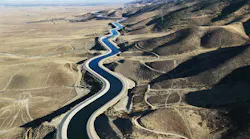
However, not all drinking water facilities experiencing perchlorate contamination go the litigation route. “There’s no need for a lawsuit,” said Joanne Chan, Director, Operations Department at West Valley Water District (WVWD) in Rialto, California when asked if WVWD, that serves drinking water to roughly 100,000 people, went the litigation route to address the perchlorate contamination at one of their wells.
A perchlorate plume, originating six miles north from a former pyrotechnics site, polluted one of the 30 groundwater wells at WVWD. The well – polluted with more than 200 ppb of perchlorate which is roughly 33 times the California’s perchlorate MCL – is owned by the City of Rialto. However, WVWD treated this well to remove the perchlorate.
When asked about this, Joanne explained, “Yeah, so it’s a regional benefit, it’s definitely a regional benefit because the city of Rialto is our neighbor. We’re located in Rialto. Yes, so we have a regional problem here. Let’s work together, let’s partner up with other local cities and local water districts.”
WVWD used bioremediation, done at a biological treatment facility, to treat 200 ppb of perchlorate in the well. The EPA’s 2021 community guide defined bioremediation as “the use of microbes [microorganisms] to clean up contaminated soil and groundwater” and further explained this works by microbes digesting contaminants. Perchlorate is a contaminant. Food digestion in humans requires stomach acid as perchlorate digestion by WVWD’s bacteria requires acetic acid.
Favorably, bioremediation does not have the resins’ problem: replacing the resins after a specific time because they lose their efficiency.
“We use PSR2 [PSR2+ resins] and it depends on the concentration of the influent water for how many cycles. The higher the perchlorate concentration and that of competing chemicals the lower the bed volumes treated,” said Robin Glenney, Assistant General Manager, Water Delivery, at Riverside Public Utilities. For ten of the 45 perchlorate-tainted wells, they used ion exchange that reduced the perchlorate levels at least eleven folds – from 33 ppb to at least three ppb.
According to Mike Alvord, one liter of PSR2+ resins at SCV Water Agency are used to treat up to 180,000 liters of water before they are replaced, an excellent performance. This is the equivalent of a water clarifier tablet, roughly the size of a green pea of one cubic centimeter, treating 180 liters of water in an aquarium before it is replaced.
However, these are not the only technologies for treating perchlorate in drinking water. Dr. Jinyong Liu, Associate Professor in the Department of Chemical and Environmental Engineering at the University of California, Riverdale, engineered a material, reported in a 2021 study, made of carbon, palladium, and molybdenum to treat perchlorate in water. Then in a 2025 study, they reportedly amended steps to this technology to improve its efficiency for removing perchlorate although from wastewater.
Now that they have reduced the perchlorate concentration from 200 ppm to roughly 30 ppb or by roughly six-fold, WVWD is phasing out bioremediation and moving to ion exchange resin technology to treat the rest of the perchlorate-tainted water.
Ion exchange technology persists at SVC Water Agency where they treat 500 to 2,200 gallons of water per minute, the very water tainted with 18 ppb of perchlorate. This treatment is roughly the equivalent of a medium-to-large helicopter Bambi bucket dumping a bucketful of water every minute to extinguish fire ignited by perchlorate in firework.
About the Author
Saleha Kuzniewski
Saleha Kuzniewski, Ph.D. has written on several scientific and legal issues. Kuzniewski can be reached at [email protected].