Microplastics emerge as a key drinking water challenge as regulators grapple with definitions and detection
Key Highlights
- Microplastics are increasingly being scrutinized by regulators, with EPA considering them for future drinking water standards.
- Defining microplastics remains complex, with varying size thresholds and criteria across organizations, complicating regulation and monitoring efforts.
- Current detection technologies face limitations, especially in identifying nanoplastics, necessitating the development of faster, more sensitive analytical methods.
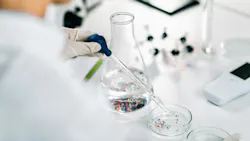
Microplastics are emerging as one of the most closely watched contaminants in the drinking water industry, but experts say significant scientific and regulatory questions remain before federal standards can be established.
During the ACE26 technical session “Contaminants of Concern,” presenters examined the evolving regulatory landscape surrounding microplastics and discussed the challenges utilities may face as monitoring and potential regulation advance.
EPA's microplastics focus signals growing regulatory interest
Federal attention on microplastics increased earlier this year when EPA announced plans to include microplastics in the draft Sixth Contaminant Candidate List (CCL6), a step that could eventually lead to future drinking water regulations. The listing identifies contaminants that may require additional research and evaluation before EPA determines whether regulation is warranted.
For water utilities, the move signals that microplastics are transitioning from an emerging research topic to a contaminant receiving increasing regulatory scrutiny.
Defining microplastics remains a major challenge
One of the biggest obstacles facing regulators is the lack of a universally accepted definition for microplastics.
During his presentation, Brent Alspach of Arcadis explained that while microplastics are commonly described as plastic particles smaller than 5 millimeters, various organizations and regulatory agencies use different definitions depending on the intended application.
California has taken a leading role in developing a drinking water-focused framework. The state defines microplastics as solid polymeric materials ranging from 1 nanometer to 5 millimeters in size while excluding naturally occurring polymers that have not been chemically modified.
However, presenters noted that even California's definition relies on multiple supporting criteria and may continue evolving as researchers gain a better understanding of how microplastics behave in drinking water systems.


Microplastics detection technology still faces limitations
While interest in monitoring microplastics continues to grow, analytical capabilities remain a challenge for both regulators and utilities.
Current detection methods such as Raman spectroscopy and infrared spectroscopy can identify particles down to the tens-of-microns range. However, scientists believe much smaller nanoplastics may also be present in drinking water sources and distribution systems.
According to session presenters, widespread implementation of monitoring programs will likely require faster, more affordable and more sensitive analytical methods than those currently available.
The complexity of detecting and quantifying particles across a broad range of sizes remains one of the industry's largest technical hurdles.
How future microplastics regulations could affect utilities
Although EPA has not proposed a drinking water standard for microplastics, presenters suggested that any future regulation may look very different from current broad definitions.
Rather than regulating all plastic particles below a certain size threshold, future standards could focus on specific polymers, particle sizes or concentrations associated with demonstrated health risks.
This approach would mirror how other drinking water contaminants are regulated based on risk and occurrence data rather than broad classifications.
Key research questions remain unanswered
Despite growing public and regulatory interest, significant knowledge gaps remain regarding microplastics in drinking water.
Researchers continue to investigate potential health impacts, occurrence rates, treatment effectiveness and interactions between microplastics and other contaminants. Questions also remain about the relative importance of source water contamination versus distribution system contributions.
As EPA evaluates microplastics through the CCL process, these research efforts will likely play a critical role in determining whether future drinking water regulations are developed and how utilities may ultimately be required to monitor and manage the contaminant.
Looking ahead
For now, microplastics remain an emerging contaminant rather than a regulated drinking water parameter. However, ACE26 presenters emphasized that utilities should closely follow developments in analytical methods, health research and federal regulatory discussions.
As the science continues to evolve, microplastics are expected to remain a major topic of discussion across the drinking water sector, particularly as regulators work to establish consistent definitions, monitoring approaches and potential risk thresholds.
About the Author
 Mandy Crispin
Mandy Crispin
Head of Content
Mandy Crispin is the editor-in-chief of WaterWorld magazine and co-host of water industry podcast Talking Under Water. She can be reached at [email protected].
 Alex Cossin
Alex Cossin
Associate Editor
Alex Cossin is the associate editor for Waterworld Magazine, Wastewater Digest and Stormwater Solutions, which compose the Endeavor Business Media Water Group. Cossin graduated from Kent State University in 2018 with a Bachelor of Science in Journalism. Cossin can be reached at [email protected].