Utilities, industry and data centers call for earlier collaboration on water planning and reuse
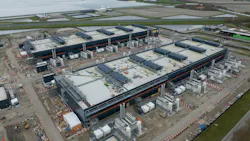
As utilities across the U.S. face growing demand from data centers, semiconductor manufacturing and other large industrial users, water leaders say long-term planning, water reuse and stronger collaboration are becoming essential tools for balancing economic growth with water security.
Those themes emerged during a panel discussion titled “How utilities partner with traditional and emerging water users for sustainable growth,” featuring representatives from the City of Columbus, Ohio, Texas Instruments (TI), Archer Daniels Midland (ADM) and Amazon Web Services (AWS).
Panelists described how rapid industrial expansion is reshaping water demand forecasts in many communities. In Columbus, Assistant Administrator Brian Haemmerle said the utility has seen significant growth from hyperscale data centers and advanced manufacturing projects since 2016, requiring new approaches to infrastructure planning and water supply management. The city considers itself supply-constrained despite its Midwest location and is conducting long-range planning studies while expanding treatment capacity.
Growing industrial water demand is reshaping utility planning
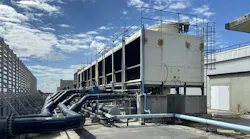
Texas Instruments Water and Wastewater Expert Sarah Wallace said industrial water demand has become a much larger share of overall water use in communities where the company is expanding semiconductor manufacturing. She emphasized the importance of engaging utilities years before construction begins to evaluate water supply, wastewater treatment capacity and future infrastructure needs. In one Texas example, TI worked with municipal officials and engineering firms to help develop a regional industrial wastewater treatment strategy that supports multiple users.
Water reuse gaining traction among utilities and large water users
Water reuse was a recurring topic throughout the discussion. Columbus is evaluating nonpotable reuse opportunities and commissioned a study to examine treatment requirements, pipeline routing and potential customers. However, Haemmerle noted that Ohio currently lacks a comprehensive regulatory framework for large-scale reuse projects, creating challenges for implementation.
AWS Principal of Water Strategy Usman Khan said reclaimed water is becoming increasingly important for data center cooling. According to Khan, AWS currently operates 26 facilities using reclaimed water and expects that number to grow to 130. He noted that regulatory requirements vary significantly by state, often influencing how quickly reuse projects can move forward.
Panelists also highlighted practical barriers to reuse, including infrastructure costs, water quality requirements and public perception. Columbus officials noted that transporting reclaimed water to emerging industrial corridors can require extensive pipeline infrastructure and pumping capacity. Industrial users such as TI said successful reuse projects often depend on consistent water quality and guaranteed supply volumes.
Several speakers stressed that early communication between utilities, industries and local governments is critical. Haemmerle said Columbus recently declined a proposed data center project because the utility could not reliably serve the requested location, illustrating the need for water availability assessments early in the site-selection process.
The discussion concluded with a common message: future growth will require coordinated investments in water infrastructure, expanded reuse programs and collaborative planning that begins well before new facilities break ground.
About the Author
 Mandy Crispin
Mandy Crispin
Head of Content
Mandy Crispin is the editor-in-chief of WaterWorld magazine and co-host of water industry podcast Talking Under Water. She can be reached at [email protected].
 Alex Cossin
Alex Cossin
Associate Editor
Alex Cossin is the associate editor for Waterworld Magazine, Wastewater Digest and Stormwater Solutions, which compose the Endeavor Business Media Water Group. Cossin graduated from Kent State University in 2018 with a Bachelor of Science in Journalism. Cossin can be reached at [email protected].