What are the sources of drinking water?
Key Highlights
- Surface water sources respond quickly to watershed inputs, making stormwater controls vital for reducing contaminant loads during storms.
- Groundwater contamination develops slowly but persists long-term, requiring proactive land use and stormwater management to prevent pollution infiltration.
- Delimiting source water protection areas helps prioritize projects and align infrastructure investments with water quality goals.
When you work in stormwater and surface water quality, sourcing drinking water rarely feels abstract. You see the upstream decisions, the land use pressures and the infrastructure constraints that quietly determine what eventually reaches a tap.
Asking what the sources of drinking water are means looking well beyond treatment plants and distribution systems. It requires understanding how surface water, groundwater and alternative supplies intersect with watershed management, regulatory frameworks and stormwater controls.
The big picture of sourcing drinking water
In the United States, drinking water originates from two primary categories: surface water and groundwater. Each source carries distinct vulnerabilities, monitoring demands and protection strategies. The Centers for Disease Control and Prevention outlines how public water systems rely on these sources.
From a stormwater perspective, the source matters because precipitation-driven runoff serves as one of the most efficient transport mechanisms for pollutants. Rainfall directly links land use activities to receiving waters, often accelerating the movement of contaminants through drainage networks.
Source selection affects how water systems manage risk and monitoring. Surface water quality can change rapidly during storms, whereas groundwater contamination tends to develop more slowly and persist for a longer period once it occurs.
Upstream land use plays a major role in source water quality. Impervious surfaces, drainage design, and runoff pathways influence how fast pollutants move and where they enter surface water and groundwater supplies.

Surface water sources: Rivers, lakes and reservoirs
Surface water supplies include rivers, streams, lakes and engineered reservoirs. These sources dominate in regions with consistent precipitation and established storage capacity. Large municipal systems often depend on surface water due to accessibility and volume.
Surface water quality reflects upstream conditions in near real time. Urban runoff introduces hydrocarbons, metals and nutrients. Agricultural drainage contributes to sediment and nutrient loading, while construction activity increases turbidity during storms.
Surface water systems respond quickly to watershed inputs. High-intensity rainfall can elevate contaminant concentrations at intakes within hours. This responsiveness presents risk, while also offering opportunity.
Engineering-led watershed projects consistently show that distributed stormwater controls reduce pollutant loading before water reaches drinking water infrastructure. For example, a paired watershed study in Columbus, Ohio, observed significant reductions in heavy metal loads, such as cadmium, copper, nickel and zinc, following installation of bioretention cells and other green infrastructure practices.
Groundwater sources: Aquifers and wells
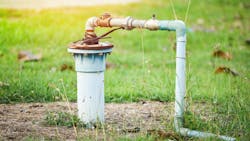
Groundwater forms when precipitation infiltrates soil and rock, accumulating in aquifers that supply public and private wells. While subsurface filtration provides attenuation, groundwater remains vulnerable to long-term contamination.
Groundwater also supplies drinking water for a substantial portion of the population, particularly outside large urban systems. National estimates show that groundwater serves 90% of rural households and 37% of urban users, making aquifer protection a central issue rather than a niche concern. Because recharge occurs over long time frames, stormwater-driven contamination or disruption can affect drinking water availability for decades.
More than 50% of Americans rely on groundwater for drinking water in some capacity, underscoring its crucial role in ensuring water supply resilience. Water’s chemical properties contribute to this vulnerability.
As an effective solvent, it mobilizes surface-applied contaminants that migrate downward through permeable soils. Fertilizers, pesticides, fuel residues and wastewater-derived compounds move into recharge zones, particularly where development overlays aquifer systems.
Research into karst aquifers and other groundwater systems reveals that microplastic particles can enter groundwater sources once thought to be isolated from surface influences. A 2023 investigation of groundwater beneath a South China Sea bedrock island found measurable microplastic contamination linked to infiltration and water exchange processes that connect surface and subsurface flows.
Groundwater contamination develops gradually and persists across decades. Once pollutants reach an aquifer, the complexity and cost of remediation escalate rapidly. Prevention through land use controls and stormwater management consistently delivers the strongest return on investment.
Source water protection areas and stormwater alignment
Source water protection areas define the land contributing water to surface intakes or groundwater wells. The United States Environmental Protection Agency describes delineation methods using hydrogeologic analysis, flow modeling and watershed mapping.
For stormwater programs, these boundaries provide operational clarity. They help prioritize projects that directly protect drinking water sources. Aligning municipal sewer system investments with protection areas ensures that pollutant reductions translate into measurable benefits for source water.
The Drinking Water Mapping Application for Protecting Source Waters supports this coordination by visualizing intakes, protection zones and potential contaminant sources. Utilities and consulting engineers increasingly use these tools to guide capital planning at the watershed scale.
Alternative and supplemental drinking water sources
While surface water and groundwater remain the primary sources, some systems integrate supplemental sources to enhance reliability.
- Desalination: Coastal utilities sometimes rely on desalination of seawater or brackish groundwater. Energy demand and concentrated disposal shape environmental trade-offs that intersect with coastal stormwater permitting and discharge management.
- Indirect potable reuse: Advanced treatment enables reclaimed water to be used for recharging aquifers or augmenting surface reservoirs. Stormwater infrastructure influences performance by managing inflow quality and protecting recharge zones, thereby enhancing the overall quality of the water.
- Large-scale rainwater capture: Institutional and regional rainwater harvesting reduces demand on centralized supplies while attenuating peak runoff. These systems provide dual benefits familiar within stormwater design frameworks.
Stormwater as a drinking water pathway
Stormwater functions as a transport system linking land use to drinking water sources. Roadways contribute hydrocarbons and metals, while industrial areas generate complex chemical mixtures. Aging wastewater infrastructure releases untreated flows during storm events.
Treatment facilities process billions of gallons of wastewater daily, yet capacity constraints persist during extreme weather. Overflow events deliver contaminants directly into surface waters and recharge areas. Managing runoff volume and quality upstream reduces stress on downstream treatment and source protection systems.
Integrating watershed management and drinking water protection
Effective sourcing of drinking water depends on cross-disciplinary coordination. Engineering case studies repeatedly show that watershed-scale stormwater retrofits outperform isolated end-of-pipe solutions. Practices such as bioretention, permeable pavement, restored floodplains and agricultural best management practices reduce pollutant export before it reaches source waters.
Natural Resources Conservation Service guidance demonstrates that watershed-based source water assessments enable targeted agricultural conservation by linking land use, hydrology and contaminant transport to drinking water risk. This reinforces that distributed conservation practices, when strategically placed, deliver durable water quality protection at scale.
Align stormwater decisions with drinking water protection
Understanding what the sources of drinking water are reshapes how you prioritize stormwater investments. Every infiltration practice influences groundwater recharge quality, and outfall affects downstream intakes. Each land use decision within a protection area compounds over time.
When sourcing drinking water becomes a defined objective within stormwater planning, infrastructure shifts from permit-driven compliance to resource-driven protection. That strengthens resilience under climate variability, population growth and evolving regulatory expectations, while positioning stormwater professionals as central contributors to drinking water security.
About the Author
Emily Newton
Emily Newton is the editor in chief of Revolutionized, a popular science publication that dives into the latest innovations in science, technology and industry.