Looking for leaks led Gainesville to kill two birds with one stone: Hydrant renewal
Key Highlights
- GRU deployed acoustic sensors on hydrants to detect leaks with pinpoint accuracy, leading to the repair of five long-standing leaks within weeks.
- Hydrant renewal involves quick, in-place refurbishment, reducing excavation, traffic disruptions and repair costs.
- Continuous monitoring provides real-time data, enabling proactive maintenance and prioritization of repairs based on actual system conditions.
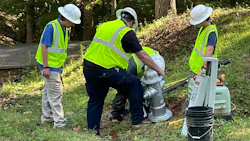
Gainesville Regional Utilities (GRU) serves approximately 200,000 residents across the Gainesville, GA urban area and manages 1,145 miles of water transmission and distribution lines. The city has struggled with a handful of undetected leaks that have been contributing to non-revenue water loss. Finding those leaks efficiently is important because the small water works team has to manage a long list of tasks.
"We do have a lot of older areas in the system, and some of those leaks are difficult to find," said Joseph Andrews, Construction Superintendent for the city's water distribution department. "We even had a leak that several more experienced guys had been chasing for years."
Gainesville is growing fast, which adds pressure to its aging infrastructure. This includes hydrants and distribution lines that can be beneath concrete slabs, asphalt, and surrounded by other utilities, often making excavation a tricky or substantial endeavor. Finding leaks in that environment has historically meant a combination of experience, educated guessing, and a lot of digging.
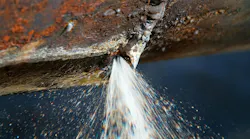
With summer temperatures reaching the mid-to-high 80’s °F and winters that can drop into the 20’s °F, ground movement from these changes compounds the challenge. As Andrews put it, "Any minute movement on a pipe can break it," meaning leaks can develop gradually and invisibly, persisting for extended periods before surfacing in ways that are detectable by traditional methods.
Finding leaks with acoustic monitoring
Gainesville launched a pilot program in a residential neighborhood, deploying a hydrant renewal solution that combines mechanical refurbishment of existing fire hydrants with acoustic leak detection technology. Rather than excavating and replacing aging hydrants entirely, a process that can require significant traffic control, sidewalk removal, and coordination around other buried utilities, the renewal approach replaces internal hydrant components in place, typically with a two-person crew and a crane truck, in a matter of hours. The first installation was completed quickly enough that the road crew was redeployed to other projects the same day, and road closures were minimal.
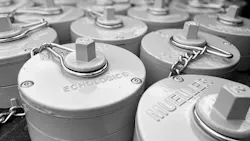
What elevated the pilot from a mechanical upgrade to a genuine intelligence-gathering tool was the addition of Echologics EchoShore-DX acoustic monitoring sensors installed on renewed hydrants and at additional hydrants across the distribution network. The technology uses advanced acoustic analysis to detect the sound signatures of water escaping from pressurized pipes and pinpoints the leak to within a few feet.
Within weeks of the sensors going live, the system flagged leaks that had eluded crews for years. During the pilot program, five long-standing leaks were found and repaired, with pinpoint precision.
"I got the email: 'You have a leak 106 feet from this hydrant,'" recalled Frank Ferraro, Systems Monitoring Specialist in the City's Engineering and Construction Department. "So, we measured it and found the leak on the pipe at exactly 106 feet from the hydrant. And in just a few months, we have found and repaired five leaks. It's impressive."
When a leak is located within a few feet rather than a general block radius, crews know exactly where to dig. Less excavation means less cost, less disruption to residents and traffic, and faster repair timelines, and these financial savings flow directly through to ratepayers.
With this proof of ROI, GRU can map out a path to address its aging water distribution system by renewing hydrants and finding leaks while avoiding the cost, disruption, and frustration of traditional excavation.
Confidence in infrastructure and hydrant reliability
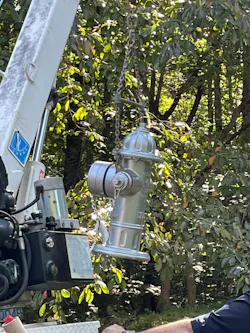
Beyond leak-detection capability, the renewal program is also giving GRU's water department confidence in the infrastructure it operates across more than 1,000 miles of pipe.
"The hydrant renewal solution helps in several ways," Andrews explained. "We can make sure the hydrant is going to work because we're replacing critical aging hydrant parts. And then we are adding this layer of monitoring of the system around the hydrant. Now I can be confident in the operation of the hydrant that I've renewed, and the infrastructure attached to it."
With monitoring data flowing continuously from the renewed hydrant network, maintenance teams can prioritize their workload based on actual system intelligence rather than reactive response. "It allows us to determine what needs to be moved up to the top of the list," Ferraro noted. "And it speeds up the process to get us in and out for the repair."
Replacing aging infrastructure wholesale is expensive and disruptive, but leaving it in place without visibility into its condition slowly drains system revenue and reliability. For a small utility with a growing population like GRU, combining in-place renewal with continuous acoustic monitoring extends the life of existing assets while providing the data visibility needed to manage them proactively.
As Ferraro summarized it: "We're doing more than just rebuilding, we're adding technology and insights to the distribution system that didn't exist before, that's really valuable."
About the Author
John Burroughs
John Burroughs is infrastructure territory manager for Mueller Water Products