Navajo Nation urges Congress to pass water rights bill
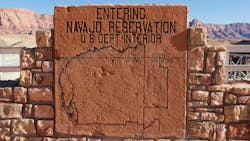
Navajo Nation President Buu Nygren is calling on Congress to pass S. 953, the Northeastern Arizona Indian Water Rights Settlement Act, citing urgent drinking water access challenges facing tribal communities.
Testifying before the Senate Committee on Indian Affairs, Nygren highlighted the continued lack of basic water infrastructure across the Navajo Nation.
“Roughly a third of Navajo households still lack running water,” President Nygren said in a press release. “I grew up hauling five-gallon buckets with my mom and grandma. Today, thousands of our people still travel over 30 miles round trip to meet basic water needs. It costs on average $600 a month per family—crippling for those living below the poverty line.”
The proposed legislation would resolve long-standing tribal water rights claims tied to the Colorado River, while providing federal funding for water infrastructure and contributing to water savings in Lake Powell. Under the agreement, tribes would waive certain basin water claims in exchange for investment in drinking water systems and economic development.

Nygren said the settlement includes provisions to create a 17,050 acre-feet-per-year water savings pool in Lake Powell for 20 years and emphasized that any leasing of water to Lower Basin users would require congressional approval.
He also pointed to the long-term economic impacts of the Navajo Generating Station closure on tribal communities.
“This is half of what was previously used for decades by the Navajo Generating Station, whose closure devastated the Navajo Nation and the Hopi Tribe economically,” Nygren said in a press release.
Lamar Keevama, chairman of the Hopi Tribe, emphasized the cultural and practical importance of reliable water access.
“This settlement brings certainty and stability to the Colorado River Basin by resolving longstanding claims through cooperation, not decades of litigation. Reliable water allows the Hopi people to continue living and practicing our way of life on our ancestral homeland,” Keevama added in a press release. “Water is sacred—it supports our ceremonies, our culture, and our communities. This settlement is more than a legal agreement; it is a path forward.”
Johnny Lehi Jr., vice president of the San Juan Southern Paiute Tribe, said the legislation would help fulfill long-standing commitments to his community.
“S. 953 ratifies a 26-year-old treaty establishing a permanent reservation for the San Juan Southern Paiute Tribe—the only federally recognized tribe in Arizona without an exclusive reservation. It provides tribal lands, water rights, and a trust fund to develop community water systems, allowing our families to stop hauling water long distances,” he said.
From the federal perspective, Scott Cameron, principal deputy assistant secretary for water and science at the U.S. Department of the Interior, said negotiated settlements can provide a more efficient path forward.
“The bill would accomplish a lot of good things…providing drinking water for folks who haven’t had it forever,” Cameron said in a press release, noting that the administration looks forward to working with the tribes and Congress to explore cost-effective ways to implement the settlement.