Water utilities urged to plan early as data center growth reshapes water demand
Key Highlights
- Utilities should engage early with data center developers to understand water demands, cooling strategies, and expansion plans.
- Water reuse, especially reclaimed water, offers a promising solution to offset potable water needs for data centers.
- Balancing water and energy impacts requires evaluating both onsite cooling technologies and indirect water use from electricity generation.
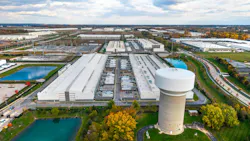
As artificial intelligence accelerates demand for new data centers, water utilities are being encouraged to take a more proactive role in planning, infrastructure development and community engagement, according to presenters at a technical session during the American Water Works Association’s ACE26 conference in Washington, D.C.
The session, titled Cooling the Cloud: How Water Utilities Can Prepare to Adapt to Data Center Growth, explored the opportunities and challenges that rapid data center expansion presents for water systems. Speakers highlighted growing concerns around water supply, energy consumption, infrastructure investment and public perception as communities across the U.S. compete for data center development.
Data centers create new planning challenges
Rachel Gonsenhauser of the American Water Works Association outlined findings from AWWA’s recent white paper, Cooling the Cloud: Water Utilities in a Data-Driven World. She noted that utilities must prepare for data center development well before projects break ground by understanding anticipated water demands, cooling technologies, construction timelines and future expansion plans. Utilities should also assess source water availability, treatment capacity and distribution system limitations.
The report recommends early information sharing between utilities and developers, including discussions about cooling strategies, peak water demands, commissioning schedules and long-term growth projections. It also encourages coordination with regional water planners and neighboring utilities to evaluate watershed-wide impacts.
A key concern is the possibility of stranded infrastructure investments if cooling technologies evolve and significantly reduce future water demand after utilities have expanded facilities to serve new customers. Reclaimed water was highlighted as one potential strategy to offset potable water demand, although speakers noted that reuse infrastructure is not always available where data centers are located.
Understanding the water-energy nexus
Eddie Wilcut of Plummer focused on the increasingly complex relationship between water and energy in data center operations.
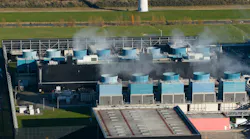
“The digital world runs on physical resources and water is the hidden cost of AI, cloud and data centers,” Wilcut said. He argued that discussions about data center water use often overlook indirect water consumption associated with electricity generation. According to Wilcut, roughly 80% of water associated with data centers can occur indirectly through power production rather than onsite cooling alone.
Wilcut noted that U.S. data centers currently consume between 4% and 4.5% of the nation’s electricity and could account for as much as 12% by 2028. As AI workloads increase, cooling requirements are also rising, driving renewed interest in advanced cooling technologies.
Rather than viewing air-cooled and water-cooled systems as competing technologies, Wilcut argued that utilities and developers must evaluate both water and energy impacts together.
“You don’t trade energy for water, and you don’t trade water for energy,” he said, emphasizing the need for balanced solutions that optimize both resources.
The presentation highlighted emerging approaches such as direct-to-chip cooling, liquid cooling systems and increased use of recycled water. Wilcut also suggested that co-locating data centers with industrial facilities capable of supplying high-quality reclaimed water could become an important strategy in the future.
Opportunity for water reuse and infrastructure investment
Panelists repeatedly pointed to water reuse as one of the most significant opportunities created by data center growth.
Participants noted that many states are currently exploring indirect and direct potable reuse programs, and data centers could help drive investments that expand reuse infrastructure. Data center developers are also increasingly pursuing water-positive goals and funding projects aimed at reducing non-revenue water, improving storage and strengthening distribution systems.
One panelist described data centers as a potential catalyst for broader water infrastructure investment at a time when federal funding sources are becoming more constrained. The ability of private-sector companies to contribute funding for water projects could help utilities address aging infrastructure and long-term resiliency needs.

Community engagement remains critical
While much of the discussion focused on water supply and infrastructure, speakers stressed that public acceptance may ultimately determine the success of future projects.
Audience members raised concerns about noise, land use and community impacts associated with large-scale data center developments. Panelists cited examples such as Loudoun County, Virginia, where data centers now undergo additional review processes and public hearings before approval. Utilities were encouraged to engage early in siting discussions and help guide development toward locations that minimize conflicts with residential areas.
Transparency emerged as a recurring theme throughout the panel. Speakers recommended that utilities communicate openly with residents about what is known, what remains uncertain and how decisions are being made. They also encouraged community meetings before nondisclosure agreements limit public discussion.
As data center development continues to expand across the country, presenters concluded that utilities must move beyond reacting to proposals and instead become active participants in shaping how these facilities integrate into local water systems and communities. Success, they argued, will depend on early planning, collaboration, reuse opportunities and a clear understanding of the increasingly interconnected relationship between water, energy and digital infrastructure.
About the Author
 Bob Crossen
Bob Crossen
Vice President of Content Strategy for the Water and Energy Groups
Bob Crossen is the vice president of content strategy for the Water and Energy Groups of Endeavor Business Media, a division of EndeavorB2B. EB2B publishes WaterWorld, Wastewater Digest and Stormwater Solutions in its water portfolio and publishes Oil & Gas Journal, Offshore Magazine, T&D World, EnergyTech and Microgrid Knowledge in its energy portfolio. Crossen graduated from Illinois State University in Dec. 2011 with a Bachelor of Arts in German and a Bachelor of Arts in Journalism. He worked for Campbell Publications, a weekly newspaper company in rural Illinois outside St. Louis for four years as a reporter and regional editor. Crossen can be reached at [email protected].
 Alex Cossin
Alex Cossin
Associate Editor
Alex Cossin is the associate editor for Waterworld Magazine, Wastewater Digest and Stormwater Solutions, which compose the Endeavor Business Media Water Group. Cossin graduated from Kent State University in 2018 with a Bachelor of Science in Journalism. Cossin can be reached at [email protected].