EPA announces $945.7 million in emerging contaminants funding for drinking water projects
Key Highlights
- The FY2026 EPA funding totals $945.7 million, with California receiving the largest share at approximately $77.3 million.
- Eligible projects include water testing, treatment installation, infrastructure construction and contaminant source reduction efforts.
- Funding allocations are based on factors like poverty levels, small water system prevalence and contaminant occurrence, with adjustments to support rural and Native communities.
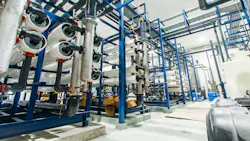
The U.S. Environmental Protection Agency (EPA) has announced $945.7 million in fiscal year 2026 funding through its Emerging Contaminants in Small or Disadvantaged Communities (EC-SDC) grant program, continuing a major federal investment in PFAS treatment and drinking water infrastructure upgrades nationwide.
The funding, authorized through the Infrastructure Investment and Jobs Act (IIJA), is intended to help states and territories reduce exposure to per- and polyfluoroalkyl substances (PFAS) and other emerging contaminants in drinking water and source water systems. Eligible projects include water quality testing, treatment installation, infrastructure construction and other activities focused on contaminant reduction.
EPA said contaminants eligible under the program extend beyond PFAS and include chemicals listed on the agency’s Contaminant Candidate Lists, including manganese, perchlorate and 1,4-dioxane.

California, Texas and Colorado receive largest allocations
According to the FY2026 allotment table, California will receive the largest share of funding at approximately $77.3 million, followed by Texas at $56.4 million, Colorado at $44.3 million and New York at $40.5 million.
Other sizable allocations include:
- Pennsylvania: $39.3 million
- Florida: $37.5 million
- New Jersey: $33.6 million
- North Carolina: $30.1 million
- Georgia: $25.4 million
- Alabama: $24.5 million
The EPA also designated an additional $19.3 million in regional allotments to support projects in American Indian and Alaska Native communities.
FY2026 formula changes shift some state allocations
Compared with FY2025 allocations, several states saw funding increases or decreases under the updated formula.
California’s allotment decreased from roughly $80.9 million in FY2025 to $77.3 million in FY2026, while Colorado’s allocation increased from about $42.1 million to $44.3 million. Texas funding rose slightly from $55.7 million to $56.4 million, and Pennsylvania increased from approximately $36.9 million to $39.3 million. Meanwhile, Puerto Rico’s allocation dropped from $14.7 million to $11.4 million.
EPA said the FY2026 funding formula was revised “to even out the statutory considerations of small and disadvantaged communities.”
The agency noted that funding distributions are based on factors including poverty levels, the prevalence of small water systems and the occurrence of emerging contaminants.
EPA emphasizes rural outreach and PFAS implementation efforts
In the memorandum, EPA acknowledged that some states have been slow to use EC-SDC grant funding from prior years, particularly in rural communities where utilities may lack awareness of available federal assistance.
To accelerate deployment, EPA highlighted two initiatives aimed at improving outreach and technical support for small and disadvantaged systems.
The agency’s new “RealWaterTA” initiative, launched in March 2026, is intended to refocus technical assistance efforts on measurable outcomes and rural water system support. EPA also pointed to its PFAS OUT initiative, which provides outreach, webinars and compliance resources for systems with elevated PFAS levels.
As part of PFAS OUT, EPA is proactively contacting drinking water systems with PFOA and PFOS concentrations above the agency’s current 4 parts per trillion standard and providing guidance on treatment technologies, funding opportunities and compliance planning.

Private well owners remain eligible for funding
The memorandum also confirmed that owners of private drinking water wells not connected to public water systems remain eligible beneficiaries under the FY2026 program.
That eligibility expansion was first introduced through the FY2024 Consolidated Appropriations Act and continues to broaden the scope of communities that can receive support for emerging contaminant mitigation projects.
About the Author
 Alex Cossin
Alex Cossin
Associate Editor
Alex Cossin is the associate editor for Waterworld Magazine, Wastewater Digest and Stormwater Solutions, which compose the Endeavor Business Media Water Group. Cossin graduated from Kent State University in 2018 with a Bachelor of Science in Journalism. Cossin can be reached at [email protected].